Eleanor Levie HomeAboutEditorial ServicesBooksGallerySpeaker TopicsWorkshopsPast BookingsFree StuffLInks Contact Me

Inspiring Quilting: Elly's blog to boost your creative IQ

More from Connected by Stitch

October 24th, 2016

Sharing today some of the more sophisticated, inspiring pieces at the show. Apologies that the photography is not up to par, but google these artists and see more of their work on their websites.
dscn0857

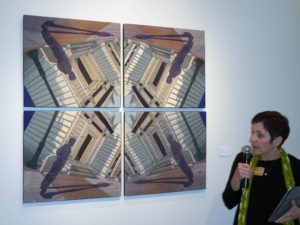
Cindy Friedman discusses this quartet (quadriptych?), like much of her work, a mirrored shadow-play. I always wanna shadow Cindy in her studio!
dscn0859

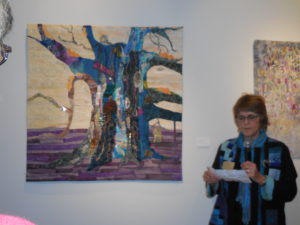
Marty Ressler created a paean to the oldest tree in America. Found objects and unusual colors grow along the bark.
dscn0855

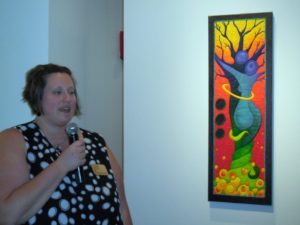
Sara Mika of Mock Pie Studio Art Quilts cooked up another view of tree-hugging…and one of the most colorful pieces.
dscn0895

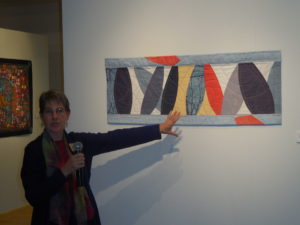
Elizabeth Bennett gave up using lots of little shapes to go in a new direction. Very modern, just enough hand-quilting in lines that playfully balance and complement.
lizdanish2

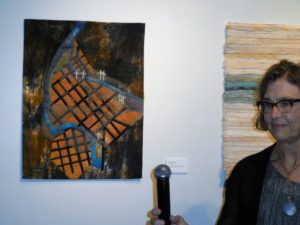
Elizabeth Danish put the inexpressible sadness of a flood that took many family lives into this piece, and into the moving statement she delivered.
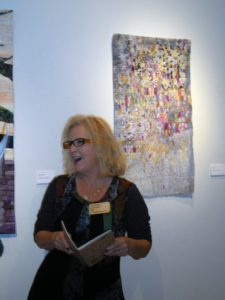
paula-swett

Lots of interesting techniques in this piece by Paula Swett. I sure want to know more…
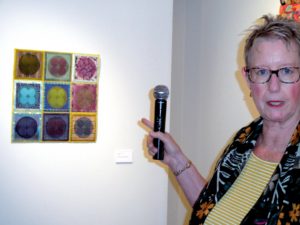
susanleonard1

Susan Leonard often works in series of circles in squares, exquisitely, perfectly rendered…and she generously divulged the secrets of her techniques.
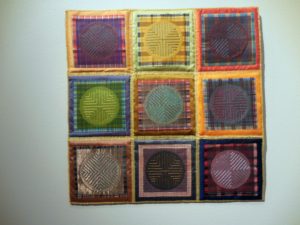
dscn0875

A second Susan Leonard piece is called School Daze, as its plaids reminded her of what she (and we all) wore…
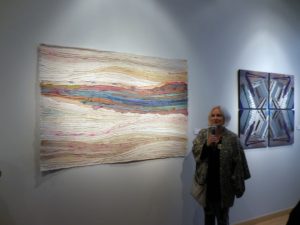
dscn0856

Made with silk ribbons cut from vintage Japanese kimonos. Elena Stokes is great at flow, no?
dscn0863

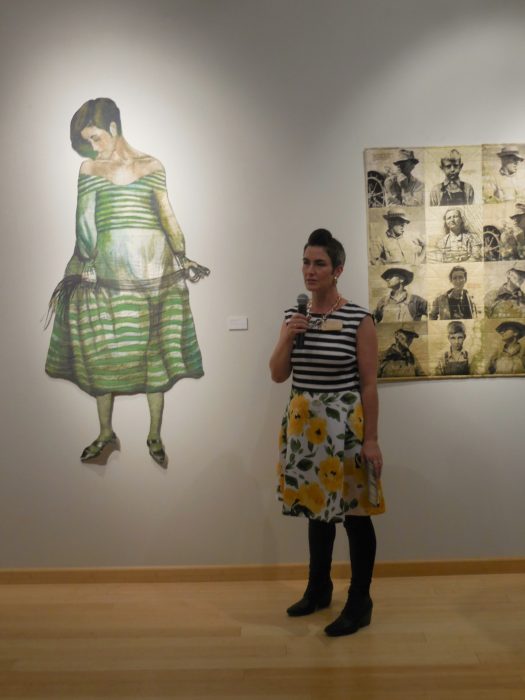
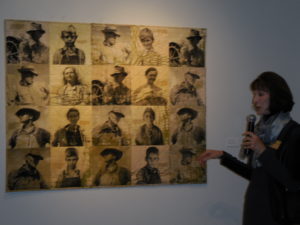
Patricia Kennedy-Zafred transfered vintage photos from the old west onto feedsack bags.
dscn0865

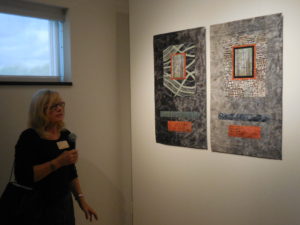
I covet this vividly, visually textural diptych by Donna Albert, with images of bamboo stalks at the center of each. What’s the feminine form of the adjective masterful?
6 Responses to “More from Connected by Stitch”

  1. So inspiring! Kinda makes me want to take up quilting.Thanks for sharing–you are somewhat mistressful yourself. (grin)

    • Eleanor says:

      Keep up the weaving, but think about stitching together all those trimmed pieces, or simply couch or applique them over a ready-made jacket so it expresses your aesthetic. I still love my Bonnie Tarses wrapped threads pin, woven padded box, colorful cards…

  2. Elena Stokes says:

    Hi Eleanor, thanks for including me and my work in your post! Actually, it’s made with remnants of old silk saris from India that have been torn into strips. Though, I am wearing a Japanese hoari, similar to a kimono. So much gorgeous silk, so little time!

  3. Thanks Elly! Just a note that the piece you are showing is comprised of silkscreened images on hand dyed fabric. The other quilt had images silkscreened on old vintage feed sacks. The images are from the Farm Security Administration collection taken in the 1930’s, courtesy of the Library of Congress. Great work in this exhibition!

Leave a Reply

Swimming with the Big Fish

October 23rd, 2016

I’m flummoxed but grateful that my piece, Swimming Upstream, was juried into the show, Connected by Stitch, the first Pennsylvania regional show by the international Studio Art Quilt Associates (SAQA) at The Gallery at Penn College for the next 6 weeks. And I feel privileged to be among some mighty fine fabric artists.

at-gallery2


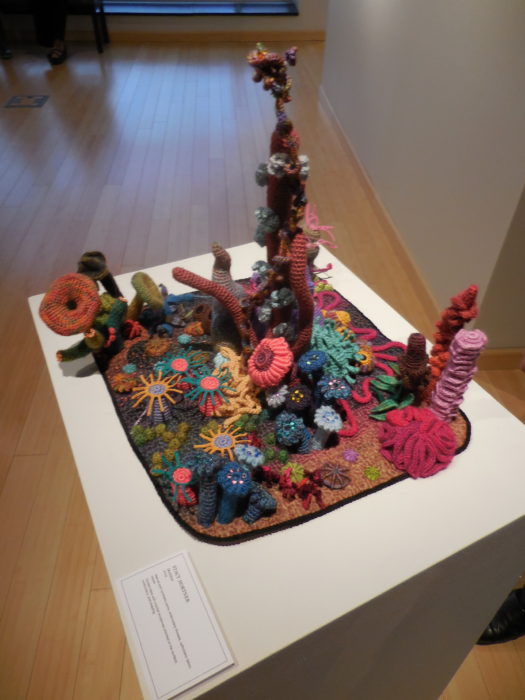
Let me share just a few of my faves in this show. I loved this little underwater paradise, a colorful, crocheted coral reef on a bed of quilting. It’s by Stacey Hortner. She’s since made this in monochromatic beiges, to express her concern over the bleaching of coral reefs, due to the massive amounts of CO2 mankind has imposed.

dscn0898

dscn0902

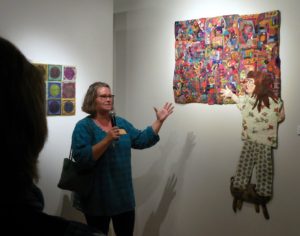
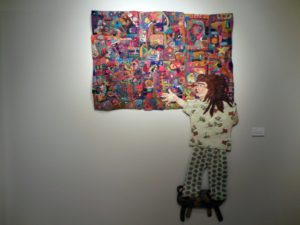
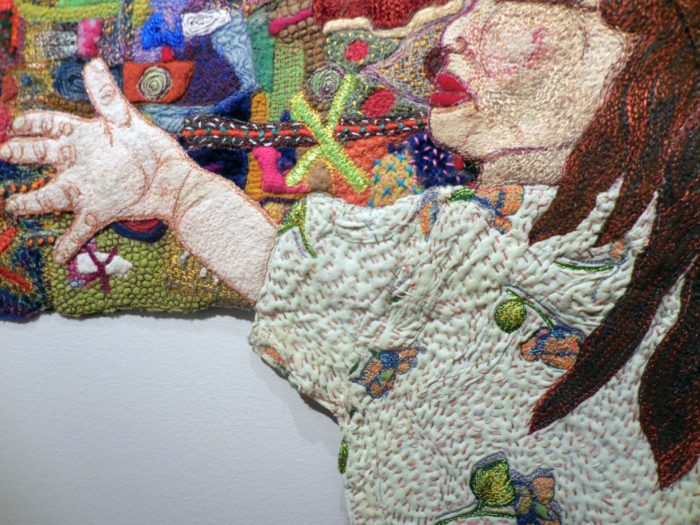
Another fun piece, with a message, is this one by Peggy Hracho. It’s got an abundance of felting, embroidery, quilting. The little girl is exhorted to “go for it,” i.e., touch the art quilt–something most quilt venues don’t allow.

dscn0879

dscn0903


dscn0906

Very exciting for departing from the usual shape and look of a quilt, is by Meredith Re Grimsley. It’s a life-size self portrait, painted and quilted, remarking on the fact that the dress no longer fits; the artist now occupies a different place in her work and in her life.

dscn0861

Finally, before I hit the sack, gotta launch one more photo, a ship by Meredith Eachus Armstrong. Fabric and wood, sculpture more than quilt. dscn0901

This Meredith, more than any other Meredith or any other person, is responsible for making this wonderful show happen. Kudos to her, from me and everyone who agrees that non-traditional contemporary quilt art really floats our boat.

4 Responses to “Swimming with the Big Fish”

  1. peggy hracho says:

    Thanks for the shout out Elly!!
    It was a fun day, and the show looks great.
    So nice to meet you.

  2. Congratulations, Eleanor, I love your piece, and thanks for sharing all the other fantastic pieces, too. That one with the girl stroking the quilt is so brilliant!

  3. Ellen says:

    Ellie, your work is wonderful. Can you explain what the meaning behind the piece is? I only ask because your work is always more than what you see. Many layers, literally and figuratively.

Leave a Reply

Swimming Upstream

October 23rd, 2016

swimgupstreamel

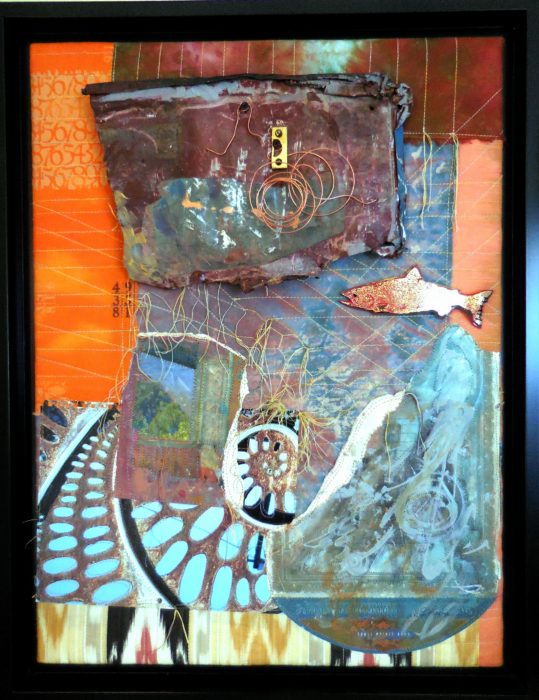
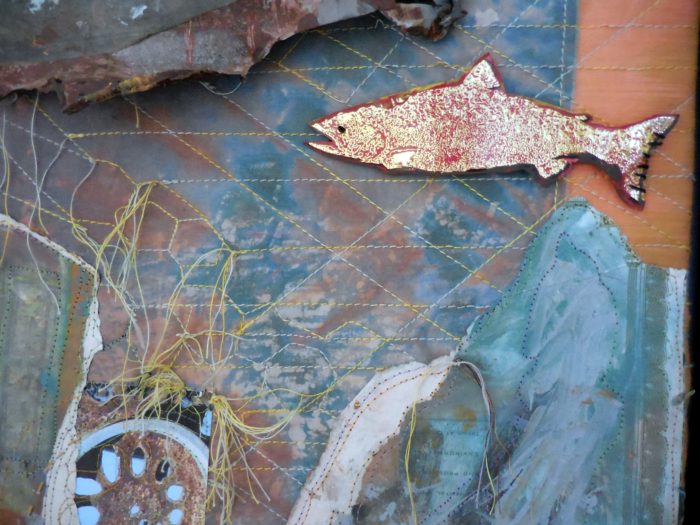
I am a bottom feeder who cannot pass up a slab of rusted metal in the street, the cardboard wrapper for some fancy smoked salmon, texture and patina. I have a box of such hard found pieces. I also have an accordion folder and loose piles of fancy papers, tear sheets, beautiful calendar pages…thank you, Sammie Moshenberg! Thank you, Barbara Adler for that glittery packaging from smoked salmon! From the time I was a girl, I collected my father’s lithography samples from when he worked for a printing company.

The obvious thing to my mind is to combine papers and metals into a collage. But I challenged myself to make unrelated materials play together. One way to do that was to use color—salmon and it’s color complement, light blue—as a way to breed the hard with the soft. Some of the papers had been given  a wash of paint, obliterating a clutter of text and integrating them into a cohesive grouping.

I thought the rusted metal held secrets, and history, and I looked to fabrics with not just color coordination but also unfathomable text and visual texture, to continue that narrative of mystery. Thank you, Lonni Rossi! I quilted them to provide a more stable background, and connected by stitch the ephemera, the old and new papers, with the cotton fabrics. Unsure of where I was going, I arranged and rearranged the composition, and when I thought I was close, I still had challenges of mounting the disparate pieces for durability of display, deciding to pull it over stretcher strips, screw spacer strips to support and elevate the metal piece, and camouflaging the screws with spirals of copper wire.

I was definitely swimming upstream, my title for the piece…. like the salmon, expecting only to get screwed by the all difficulties, and die in the end, that is, to have this project end up in the trash.

But on the other hand, I wasn’t floundering. The work had a nice flow to it, and I never felt I was fighting the current. Maybe that’s because my art quilting has not followed a single direction, despite my deep respect for artists who work in a series. I’m not a serious artist, and I can’t take my work or myself all that seriously. But I have to say, finding connections of line, and a balance of shapes is a very satisfying exercise for me. Perhaps, after all, this mixed media piece may not be a one-off; I just may return to the river where hard and soft textures and disparate elements combine. I’m not fishing for compliments, but I sure welcome feedback!

swimups-detail


Leave a Reply

Frames of Mind and Matter

August 31st, 2016

Having fun working small. As in, postcard size. And yeah, I’ve backed one with paper, wrote a message, and posted it to our son in Denmark. Postage was $1.33, by the way. Course, it’s been two weeks, and he still hasn’t gotten it…or at least, true to form, hasn’t communicated that he has, nor has he been directly in touch at all (hint hint).

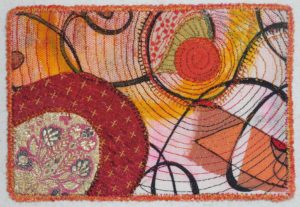
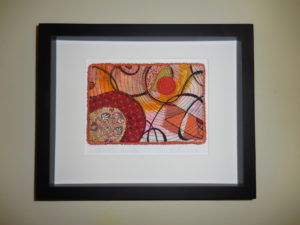
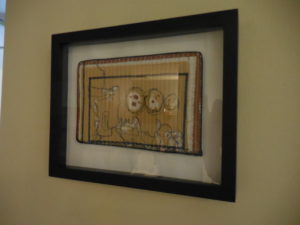
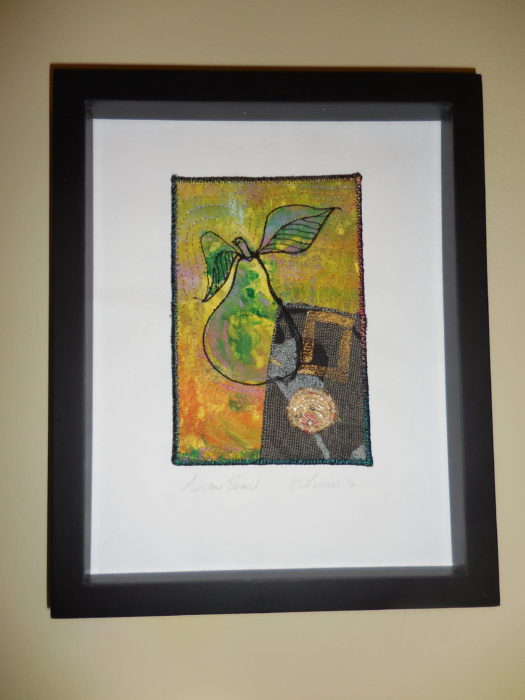
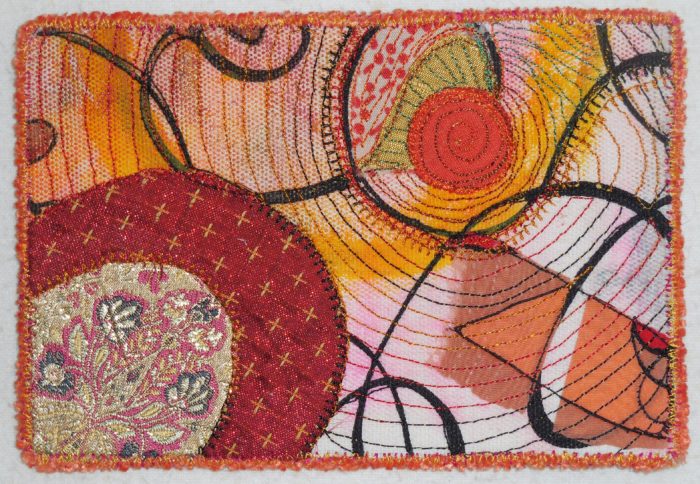
Other postcard-size quilted minis, I’ve set into a shadowbox frame. Amazing how a little postcard is suddenly transformed into a small work of art! How-to’s are easy to understand and cheap—just like me! See them on my website’s Free & Fun link, here.

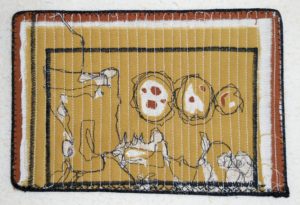
The two that follow are part of a gallery show, Summer Orbits, in a studio above the Da Vinci Art Alliance in Philly: Galactic Donuts, and Life, Mapped Out.

galactic-donutsDSCN8220

Life,Mapped-Out


DSCN8209

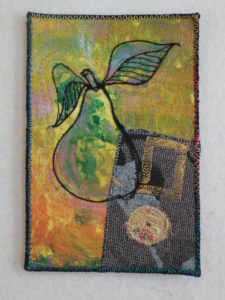
A black and metallic fabric swatch with gingko and character felt Japanese, so I named this piece Asian Pear. It resides alongside many other pears, the subject matter of art I’ve collected by various painters and photographers.  It’s the pear as body shape, natch. Just like me!

AsianPear


DSCN8200

5 Responses to “Frames of Mind and Matter”

  1. Sally K. Field says:
    Really like what you’ve done with small quilts. I have a few that would probably be enhanced by framing. Something to think about–probably in the depths of winter! Sally

  2. Thanks,
    Yours look GREAT! Maybe next winter I’ll try mounting some of mine?

  3. If you’ve got a few frames on hand, and some unsuccessful quilt projects you’re willing to cut up, you’ll always have some wonderful gifts at the ready…for about the same amount of time you’d spend shopping, and a whole lot more fun!

  4. Lucinda says:

    IKEA has a 20″ x 20″ frame in black or white that has a built in shadow box of about 1 1/4″. With glass and a Matt and wire for hanging for less than $15. It is simple and very clean lined, so it does not take away from the art. To mount artwork get a stylis from an art supply store, it is a 2 1/2″ needle set in wood in the ceramic tools section. For $2 or less sew your fiber work about every 4″ with a matching thread. Center your artwork on a mattboard. Put a can of tomatoes on it, or two to keep it from moving, poke a small hole through both artwork and Matt from the top, draw threaded needle up from underneath, move Matt to edge of the table and hang side you are working on off table, then put second stitch 1/8″ away from first, bring thread down and knot and you are ready to move to next stitch. Don’t cut thread, just go on back of Matt approximately 4″.

    If the artwork is 10″ I would put a stitch in each corner and then if it was flat, I would put one in the middle. If it is wavy I would put two stitches in at approx. 3 1/4″ and 6 3/4″. You can usually stretch uneven quilts and make them squarer with the tip of the needle. This method makes the art remove able without damage, unlike glue. The back of your fingernail on the holes will make them disappear. Taught to me by a textile department restorer from the metropolitan museum, NYC.

Leave a Reply

Cut-Ups for Quilt-Art

August 22nd, 2016

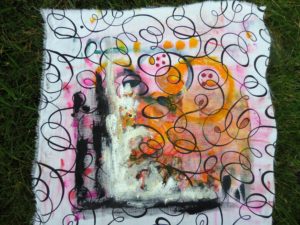
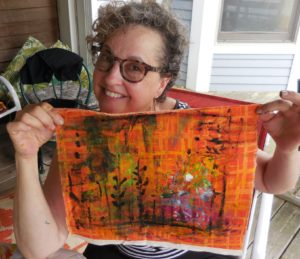
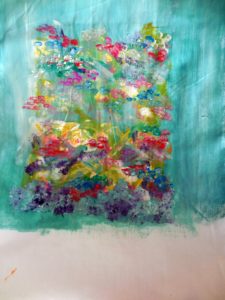
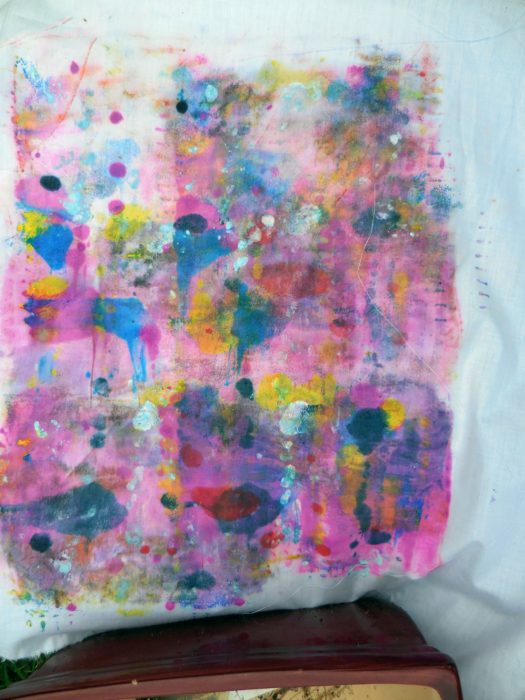
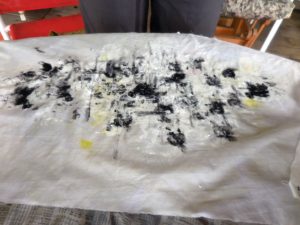
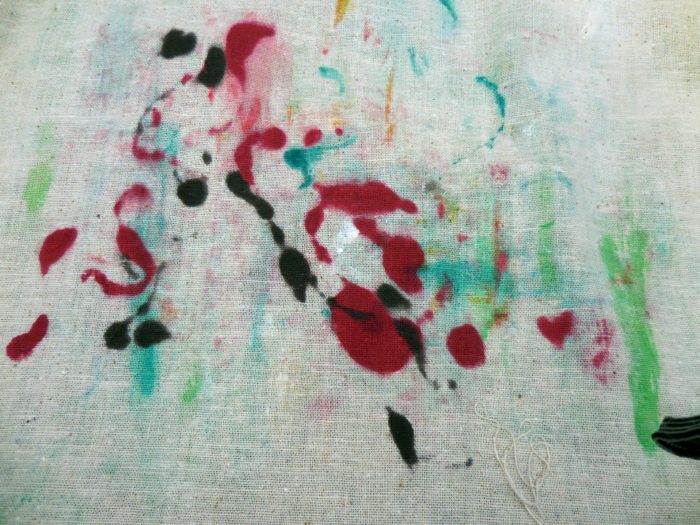
Here’s one piece of fabric from the painting play-date I described last month:

DSCN7806


I hated the result. But that doesn’t mean certain areas didn’t have potential. I cut up sections I liked, and fused them to Peltex–thick interfacing. The kind I had featured fusible on both sides, but I only adhered to one side, protecting my ironing surface from the other side with a Teflon pressing sheet.

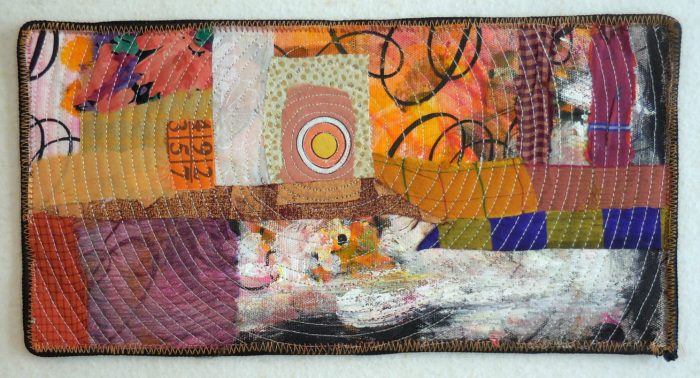
Then, I mined for gold: went through my scrap stash of mostly silks and silky fabrics for collage candidates in warm colors and light, medium, and dark accents. When I found a piece that played well with my painted background, I pressed fusible web to the back, and without measuring, I scissors-cut strips and rectangles. Auditioned some arrangements. Fused the scraps in place. Quilted to make the compositions more cohesive. Couched cord or chenille yarn around the edges for a finish.

Center-of-Gravity

               Center of Gravity, 13″x 7″

galactic-donuts

Galactic Donuts, 6″x 4″

Those painted backgrounds are pretty well covered up, I confess. Can you find the areas of the painted fabric at the top that I used for each piece?

Leave a Reply

Painting Play-Date

August 4th, 2016

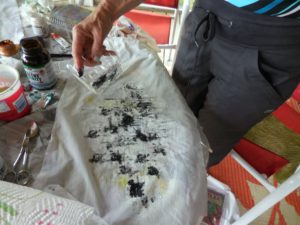
DSCN7799

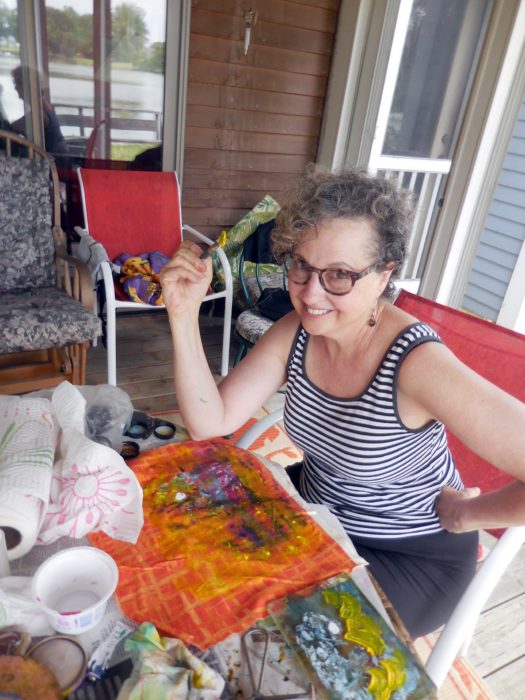
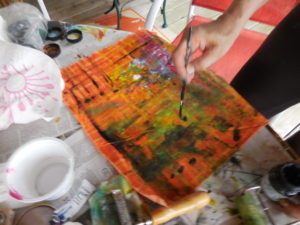
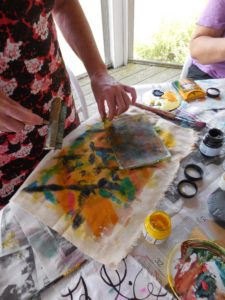
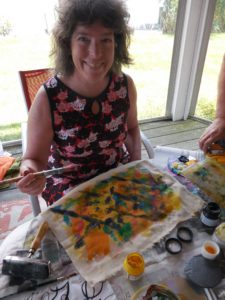
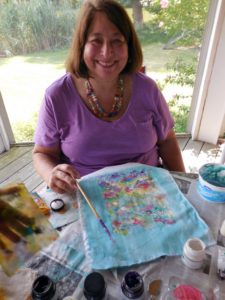
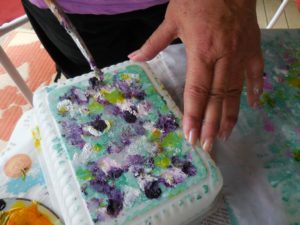
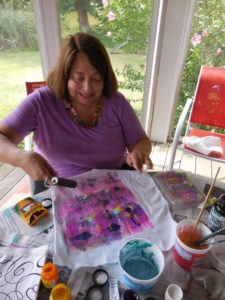
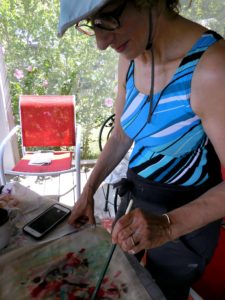
After winning, at a charity auction, a week at a large, lake-side house in Delaware, I invited a bunch of friends to come and play. On one of those mornings, three women answered the call to make art. I brought fabric, paints, brushes, a couple of brayers,  a Gelli art printing plate, and a mess of empty plastic containers, jars, and lids. I demo’ed what I’d learned about monoprinting:

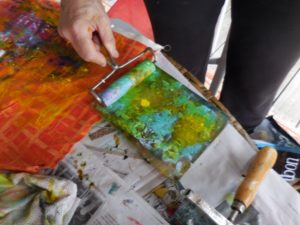
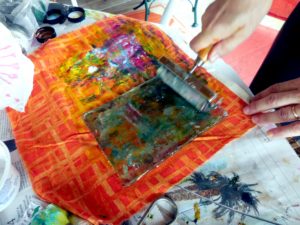
Dab bits or globs of of acrylic paint on the Gelli plate, and roll it out with a brayer. Brush on dots or drag lines with the tip of the brush handle as the spirit moves you. Then, flip the plate onto fabric (I started with an orange print), and roll over it with a second, clean brayer.

DSCN7802

DSCN7803

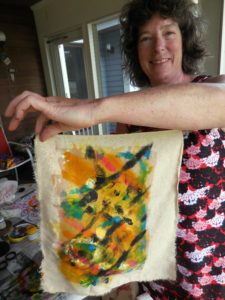
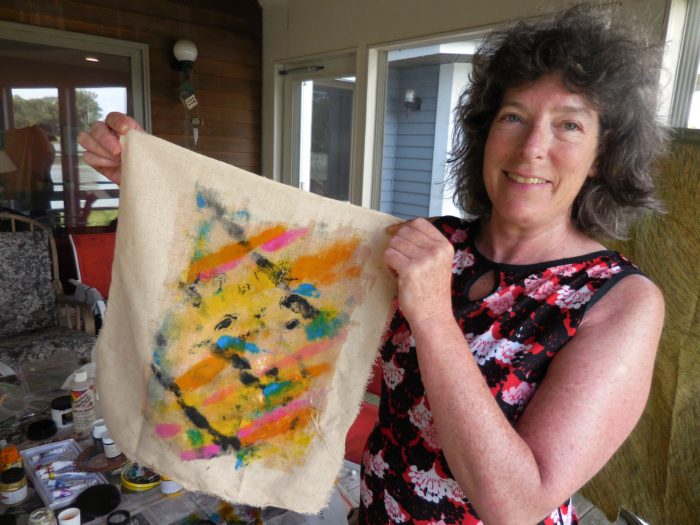
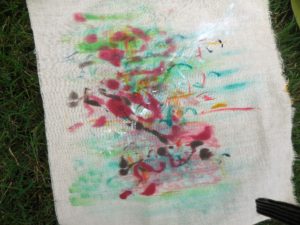
Lift it up, and see what you’ve got. Add more monoprints alongside or on top. Add dots and dashes and lines of paint.

DSCN7815


DSCN7821

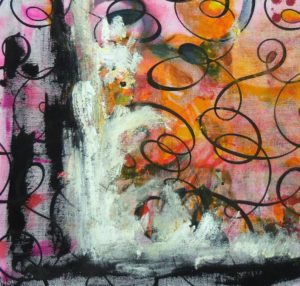
Below, check out part of another piece I belabored. I really wasn’t thrilled with anything I made. No matter! For me, this is just a start…I’ll cut up painted pieces for sections of an art quilt, or make art quilt postcards, adding other scraps, plus lots of decorative stitches.

crop

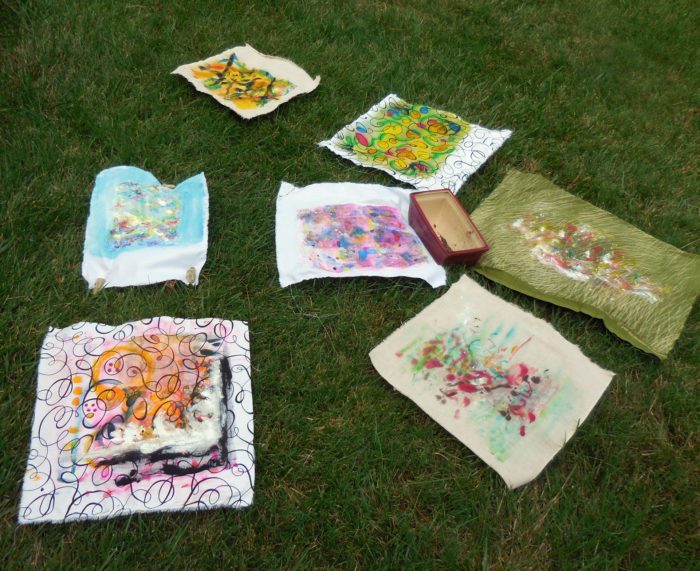
What really gets me jazzed is how my buddies, all monoprinting novices, absolutely, positively surpassed me in creating much more successful art pieces. And came up with techniques of their own that I never would have discovered.

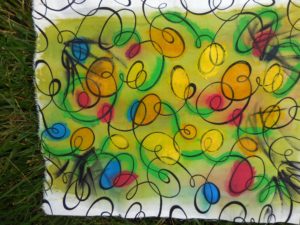
Claire dared to use the same swirly-print fabric, but with a fun, folk-arty flair:

DSCN7809

This intuitive Alaskan also used the Gelli plate to pick up excess paint from her fabric, then turned the plate 90 degrees and rolled over the brayer to deposit perpendicular patterns. Claire shows off one side, then the other. Which do you like best?

DSCN7784DSCN7788

DSCN7791

 
DSCN7790

Meanwhile, Barbara of Bucks County, PA channeled Monet. I loved how she used clear plastic containers to alternate with the Gelli plate for monoprinting.

DSCN7785  DSCN7817DSCN7789

DSCN7795

DSCN7811


Finally, Dr. Marjorie of Narberth, PA mainlined a thoroughly modern, expressionist vibe, a la Miro, or Braque:

DSCN7786DSCN7805


Again, we found that the paint that leaked onto the back of the fabric had a simpler, more compelling design. Serendipity goes a long way!

DSCN7813

dscn7810
Another Marjorie experiment with a fabric that already has a strong print.


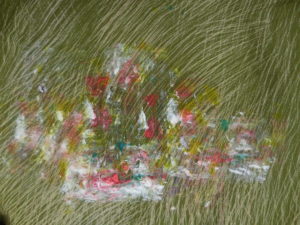
Monoprinting can be fairly monotoned, but is never monotonous. Printing over and over with the underside of a clear plastic container leads to a powerful abstract statement.

DSCN7797DSCN7818


DSCN7804

Many thanks to Miss Peggy, for taking over the photographing, given that our hands were full of paint!

Working with paints and various tools makes for lots of trading brushes and plastic lid paint palettes…and lots of mess. All the better to find a buddy or two or three to share the setting up, cleaning up, and fun. Can’t wait for the next play-date!


6 Responses to “Painting Play-Date”

  1. Looks like you had fun, with lovely results! Now I want to paint something!

  2. Diane says:
    That swirly print base fabric is to dye for. I would love some of that, do you still have the selvedge, can you read the manufacturer, the model name, anything????

    I buy white-on-white fabric when I find it and it makes the most miraculous deconstructed screen prints.

    Thanks for sharing the fun.

    Diane
    • Probably got it at Jo-Ann’s, in a remnant bin…or on a bolt. It’s indoor-outdoor fabric, like (if not) Sunbrella or Solarium. Doubt it’s still around, and really, it doesn’t absorb dye or paint as cotton would.

Leave a Reply

What’s new is Oldham, Todd Oldham

June 14th, 2016

1

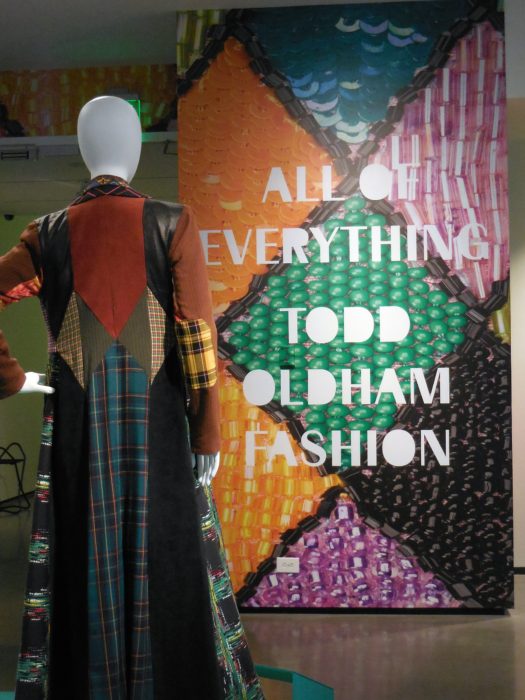
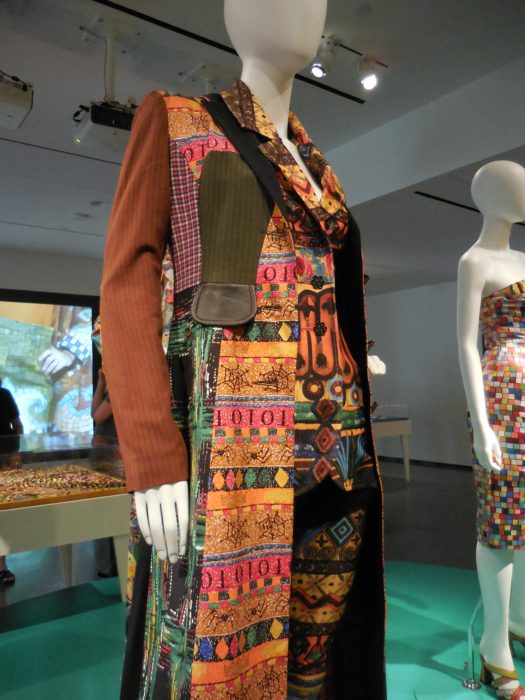
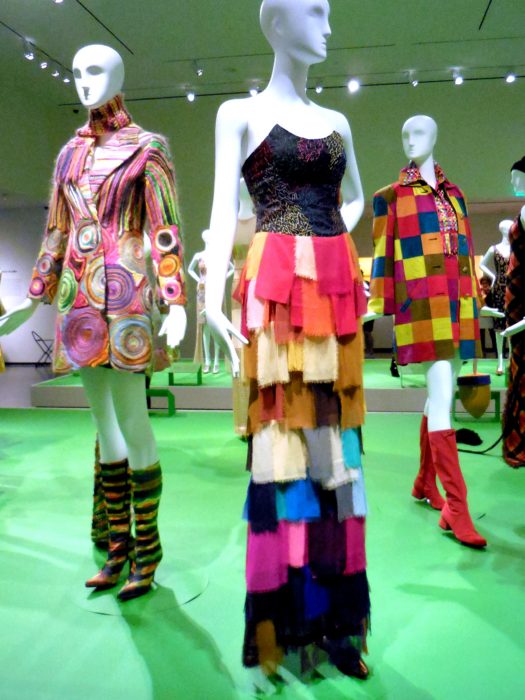
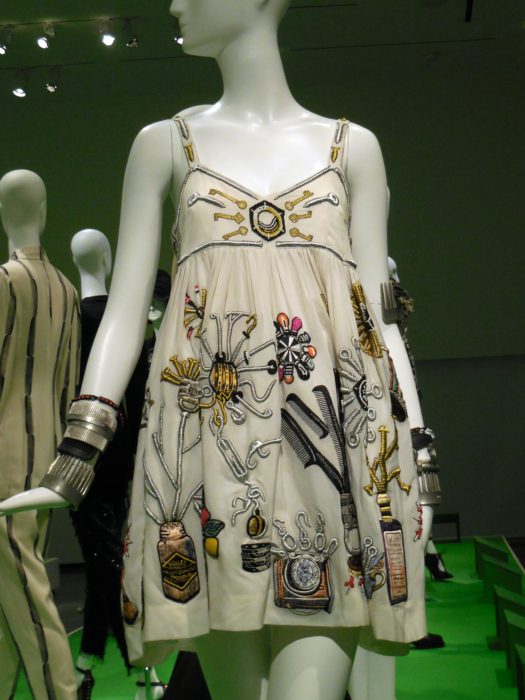
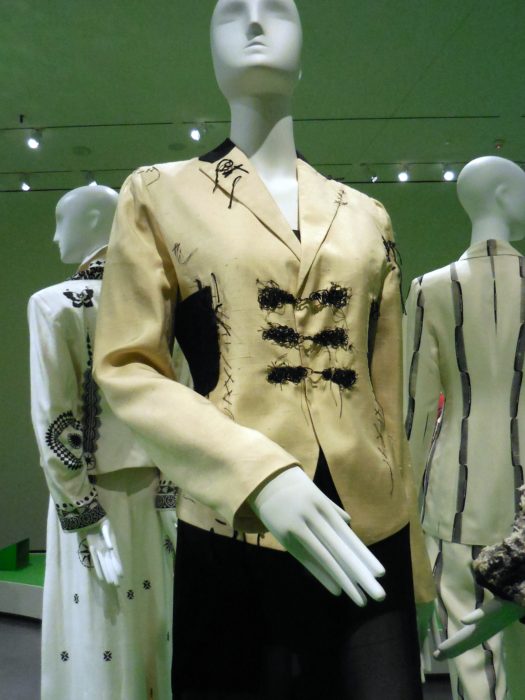
All of Everything refers to the many materials, styles and themes that Todd Oldham used to put into his fashion. It is the name of the show, the first major exhibition to focus on the exuberant style and playful aesthetic of Todd Oldham’s runway opus of the 1990s. I just saw it at the Rhode Island School of Design (RISD) Museum; it’s there until Sept. 11.
Some glimpses that us quilters will love…that is, IF you’re into All of Everything, and everything but the kitchen sink in your fashion!

Patchwork

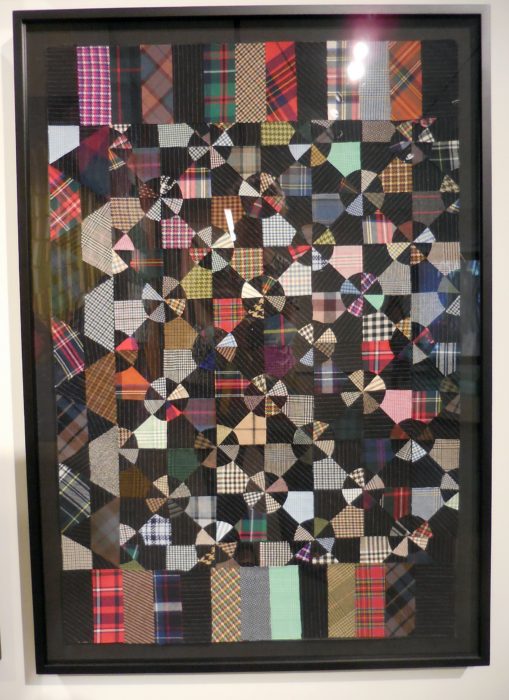
Different types of fabrics and patterns in the coats above and below, and in the mock-up with glued wool that was photographed and used for a print.

DSCN6827


DSCN6821

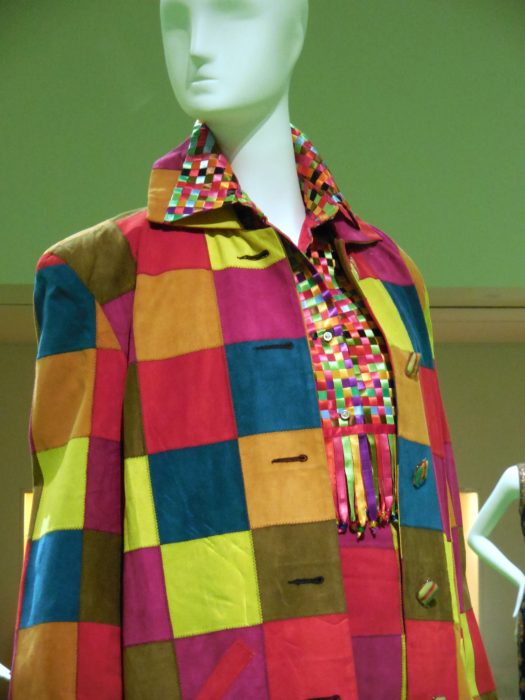
Patchwork with Woven Ribbons

DSCN6799

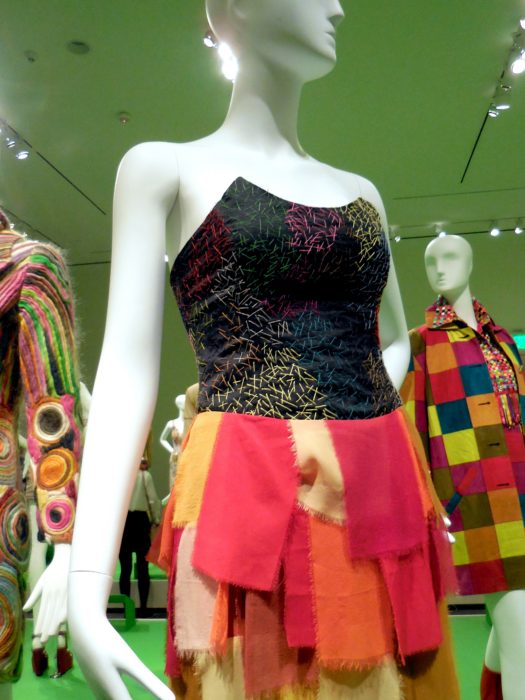
Embroidery

DSCN6800

DSCN6802

DSCN6795


DSCN6790

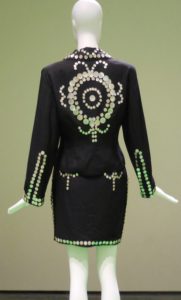
Button Embellishment

DSCN6873

DSCN6874


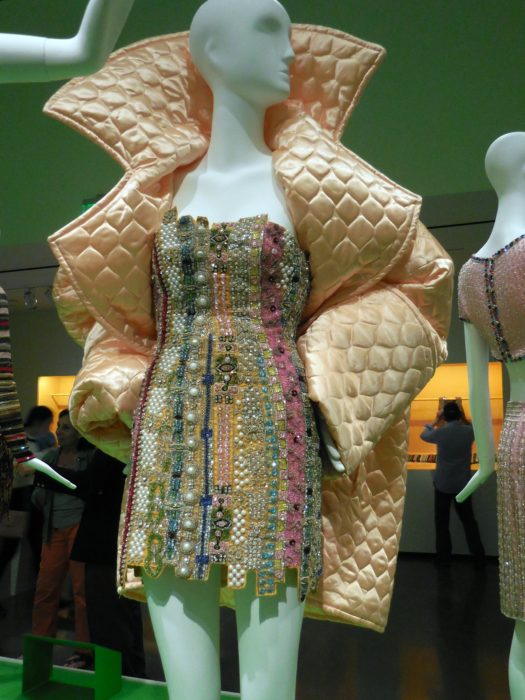
Beading, Quilting

DSCN6812

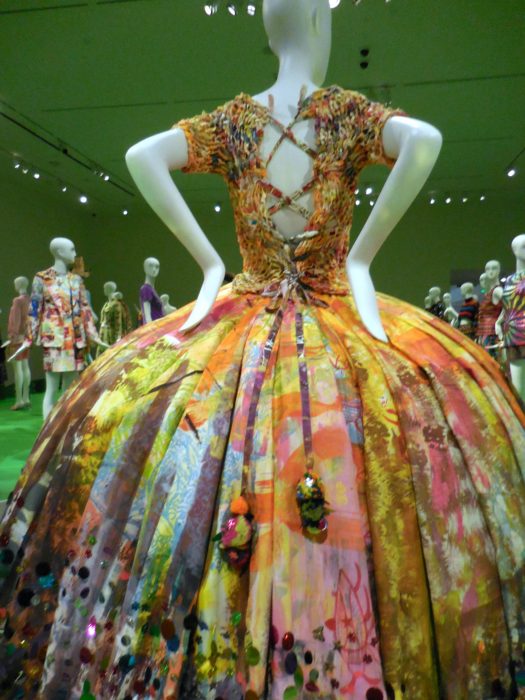
Knitting, Lacing, Surface Design, & Beading

DSCN6876


DSCN6809

This last pièce de irresistance was the culmination of a class Oldham taught at RISD in 2014. Except for this collaboration, it has been 14 or 15 years since he’s designed fashion. In the years since, he’s been putting All of Everything into interior design, kid-crafts, and other follies for Target, Old Navy, La-Z-Boy, Escada, movies, and TV. Check out his home here!

13OLDHAM-slide-TAJ3-facebookJumbo

One Response to “What’s new is Oldham, Todd Oldham”

  1. Thank you so much for sharing this fascinating and fun exhibit with us!!! Wonderful eye-candy!

Leave a Reply

LOUD Conversation prints!–Love ’em!

June 1st, 2016

DSCN6623

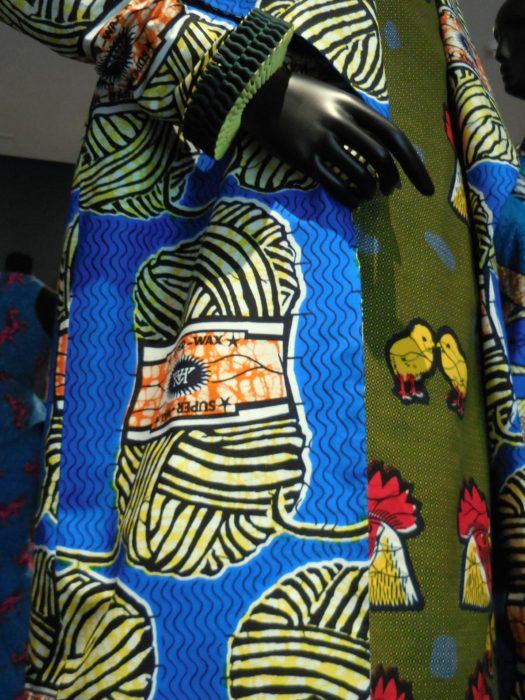
Contemporary wax printed textiles stretched onto frames—I’m guessing 24″ x 36″— like art: as stunning as the fashions in the Creative Africa exhibit currently at the Philadelphia Museum of Art’s Perlman annex. Did you catch my blog post about that? you can look at it here.

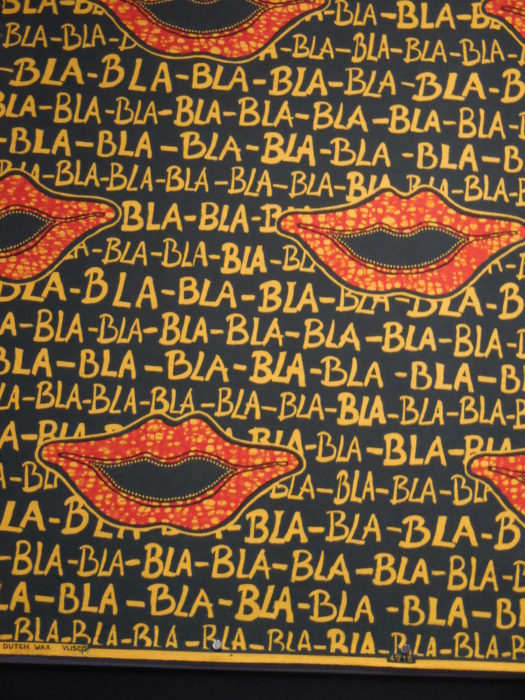
The comments are really interesting, as comments always are! The print below, though it seems to belittle conversation and communication, nonetheless speaks to the way all us quilters silently express ourselves through cloth:

DSCN6614

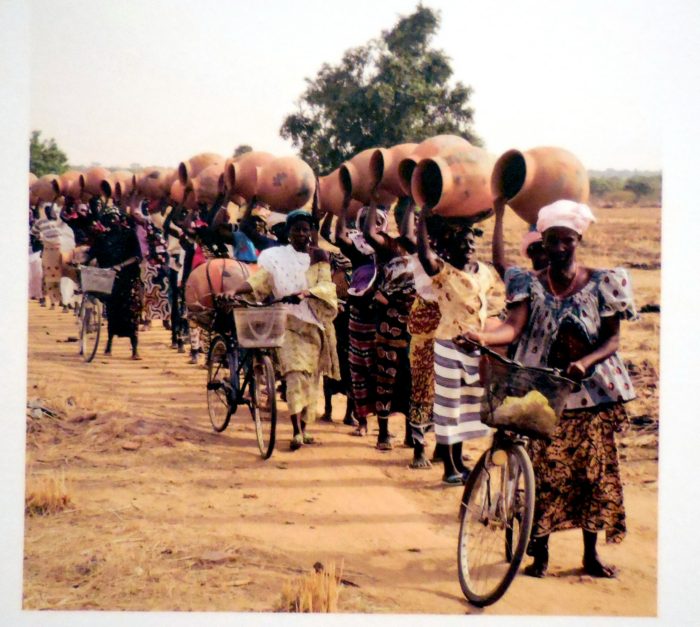
Although most people think of them as African, the fabrics are designed by Dutch designers and made in the Netherlands by Vlisco. Still, they are inspired by African motifs and symbols, and made into clothing and worn mostly by Africans. Here’s a photo from the collection of African architect Francis Kéré, also shown in the PMA exhibit:

DSCN6657

Clearly, the fabric you wear is an important way of expressing who you are. And your position in society. Here, the reference is to bolts of fabric included in an African woman’s dowry.

DSCN6616

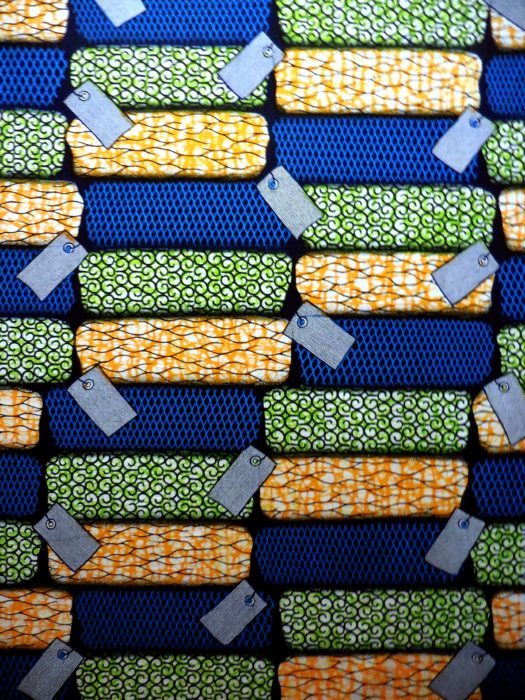
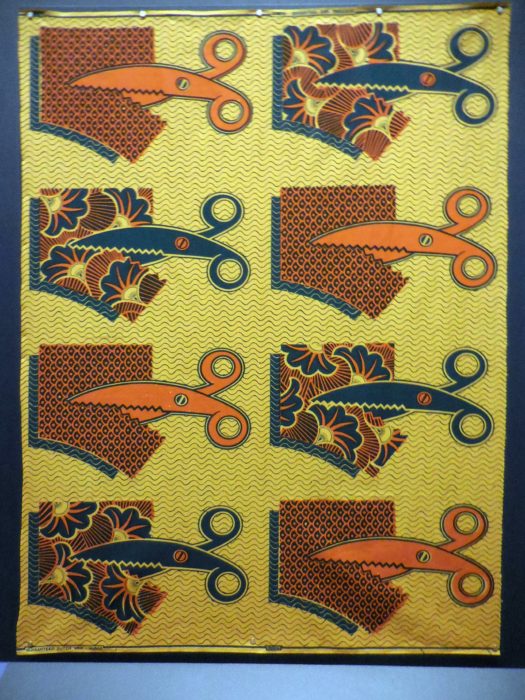
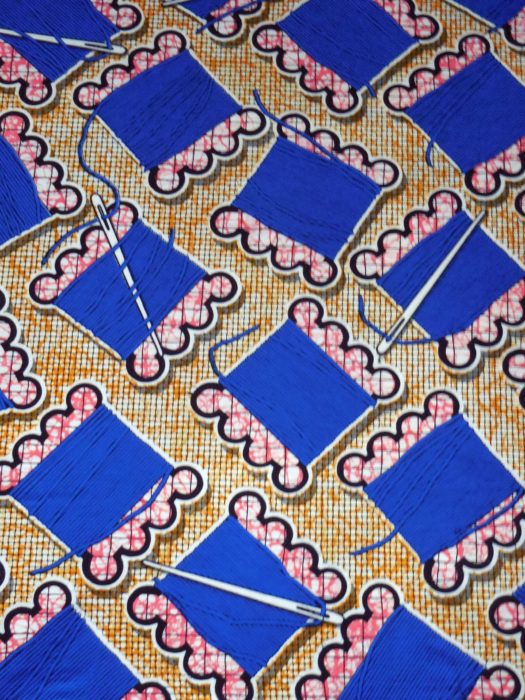
I naturally gravitated toward other motifs related to cutting and stitching:


DSCN6633

DSCN6632

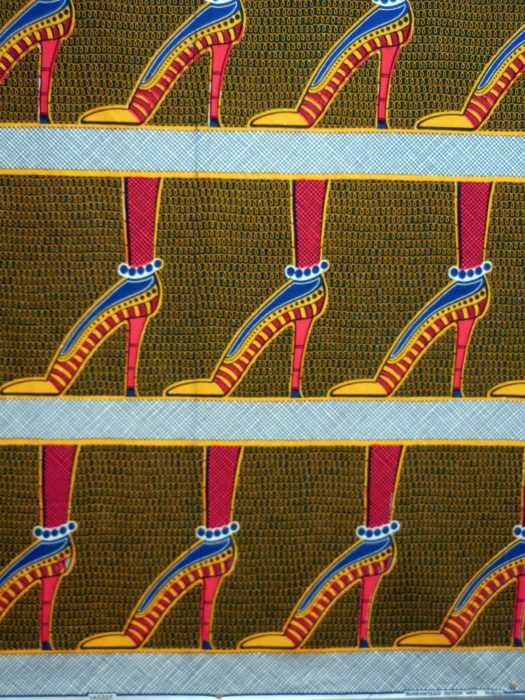
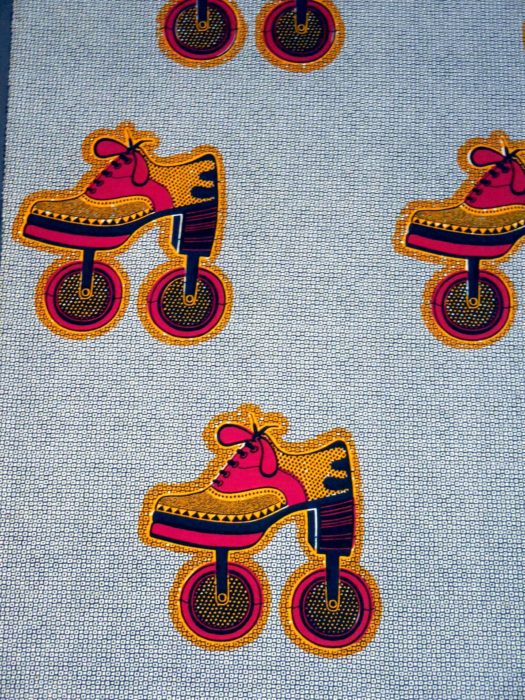
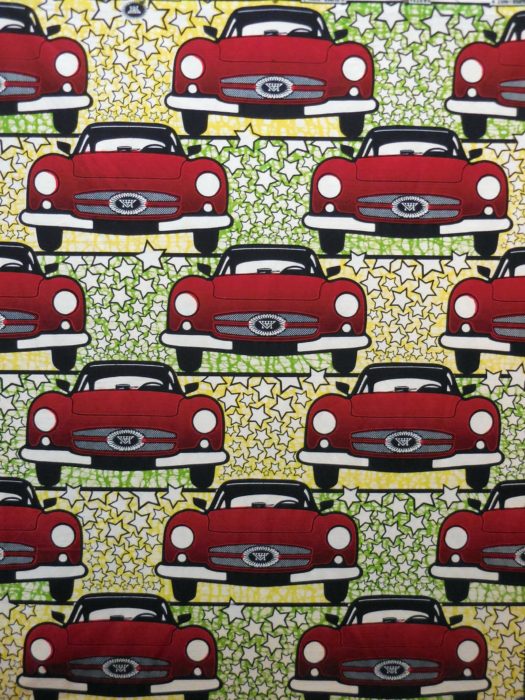
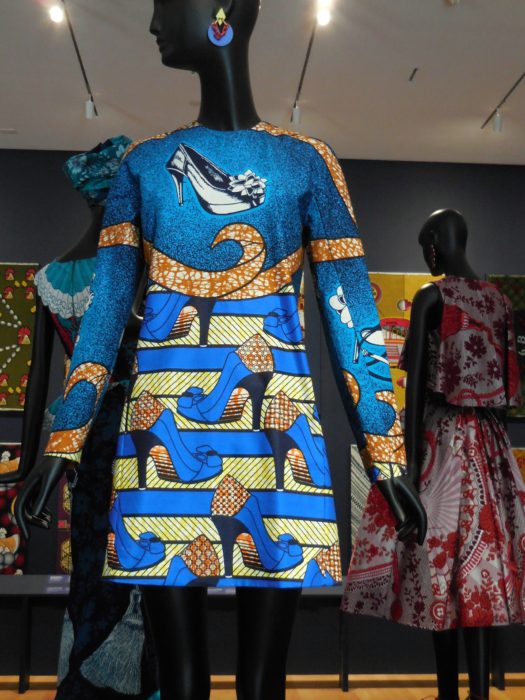
Symbols of upwardly mobile wealth, especially for women in the market and on the go, also take the forms of fancy shoes, wheels, and cars.

DSCN6631

DSCN6624

On the grill of a luxury car, the Vlisco logo takes over for Mercedes Benz.

DSCN6639

DSCN6640

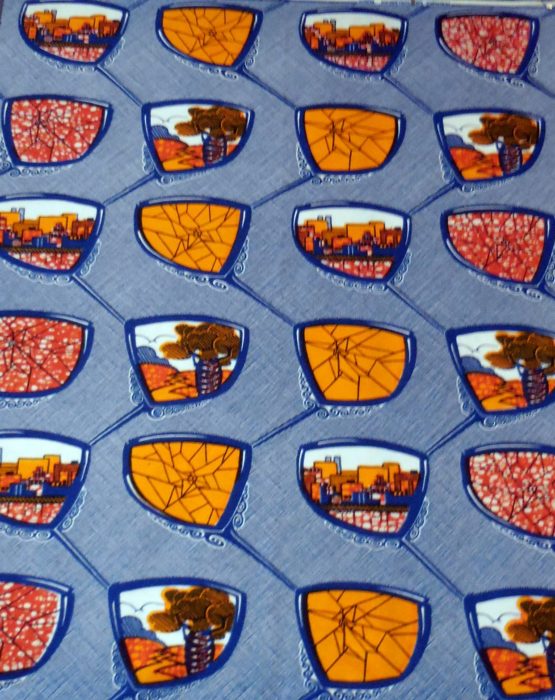
Think those cracks in the side mirrors of a Mercedes refer to our warped perceptions of where we’ve come from, i.e., our humble beginnings? Or literally to the batik process of breaking up the wax painted on the fabric so dyes can seep into the cracks?

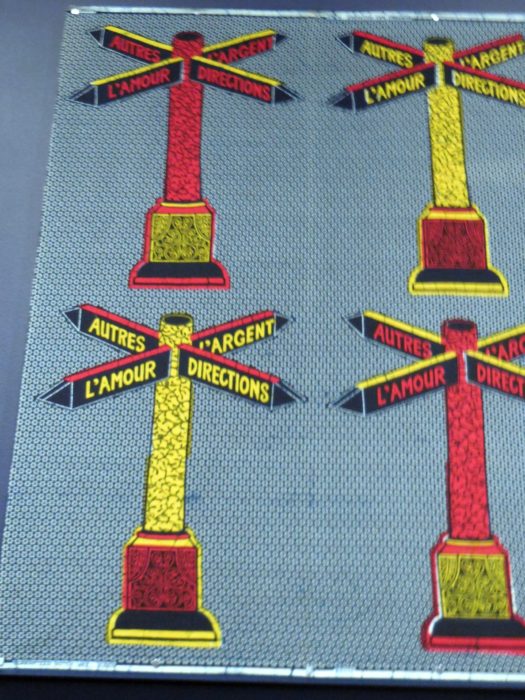
Another traffic-related print poses the question, are you heading towards love or money?

DSCN6646

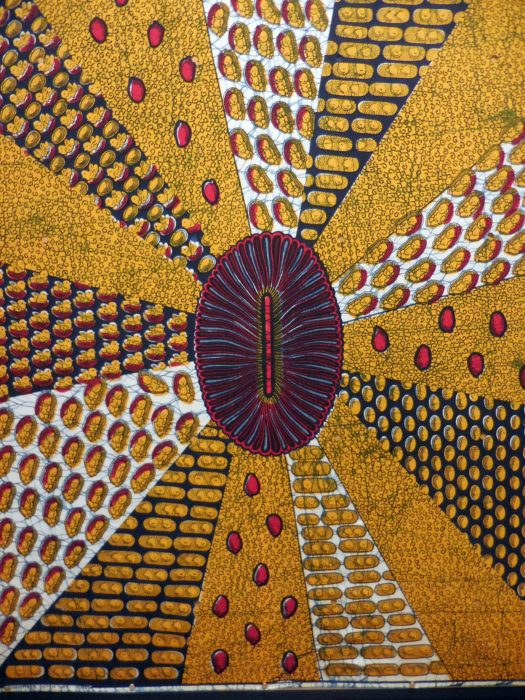
Perhaps the most “out-there” fabric from 1953 features a traditional patchwork design around a sort of fertility mandala, shall I say? It’s named after an African proverb that translates to “children are better than money.”

DSCN6648

Stay tuned. My next post will show some distinctly African-made fabrics. In the meantime, how do YOU use conversation prints in your work?

Leave a Reply

Sew Resplendent!

May 30th, 2016

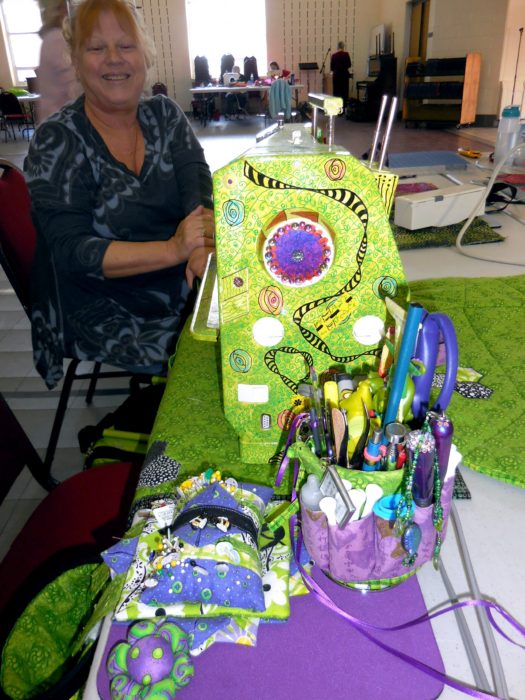
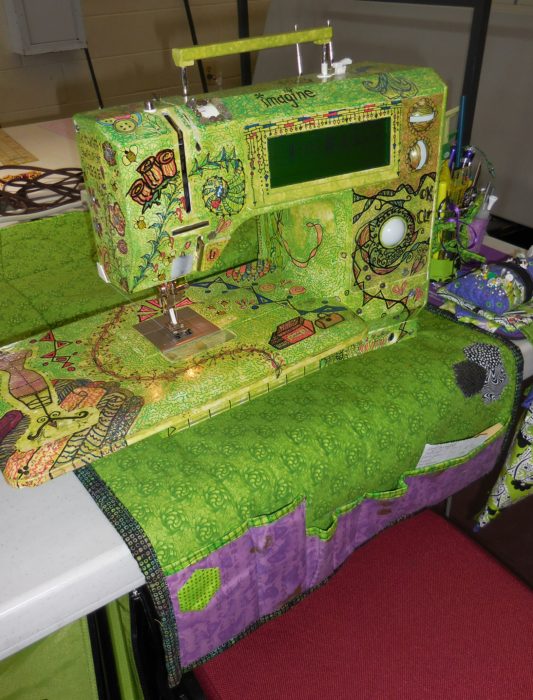
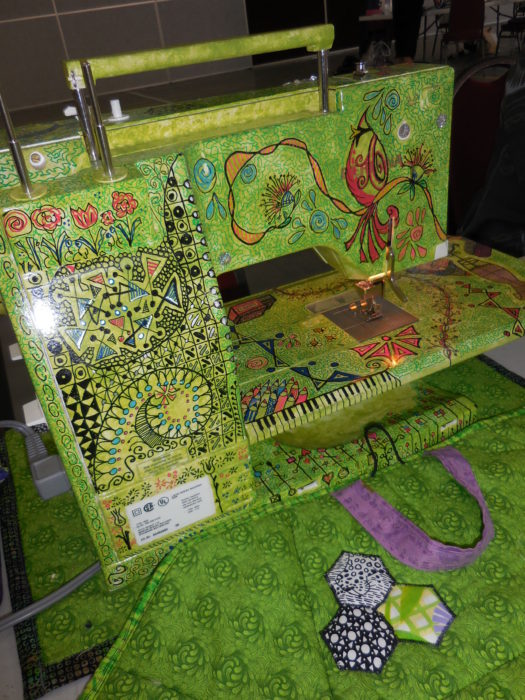
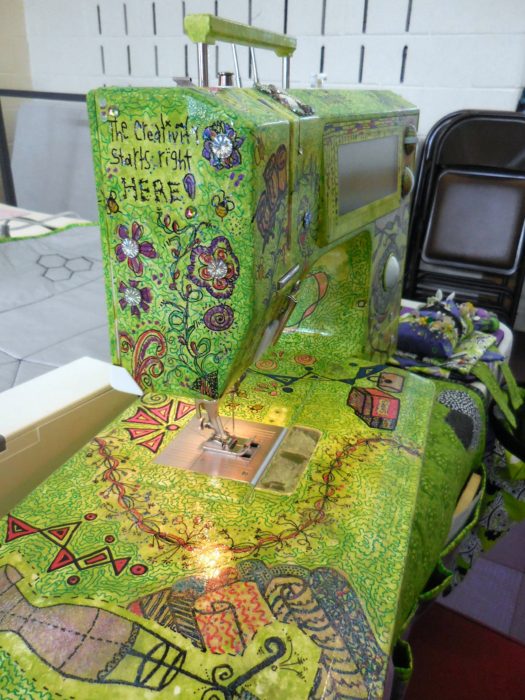
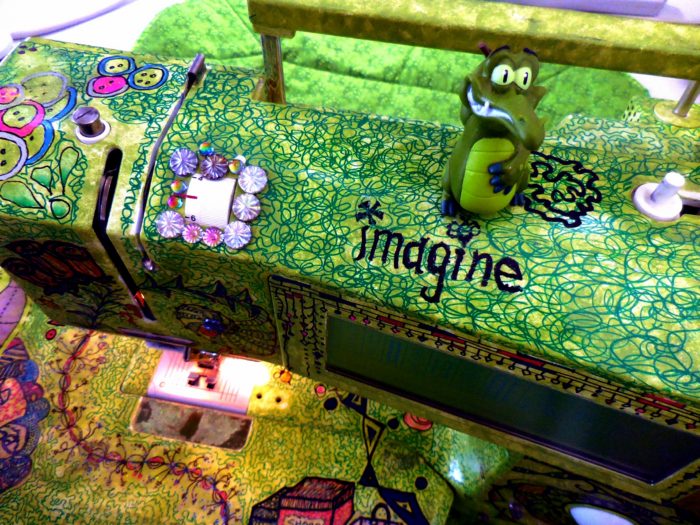
Visiting with the Columbine Quilters in Colorado, I got to admire the many talents of one member in particular, Pam Ballard. Pam brought her spectacularly unique sewing machine to my workshop, and I’m so glad she did…

1,PB

1

This sewing maven graciously allows me to share her method to machine embellishment:

  1. Tape over all openings to prevent paint from seeping into the machine workings.
  2. Dilute nail polish (in this case, a chartreuse color) with acetone (nail polish remover) in order to lighten it. Apply with a sponge in up and down movements.
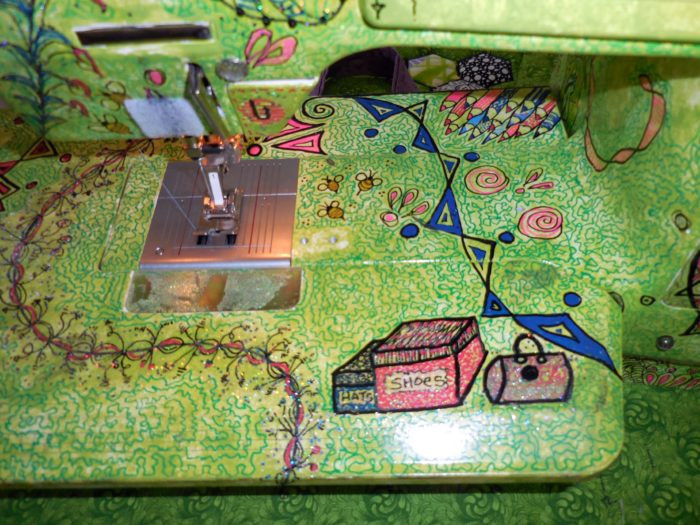
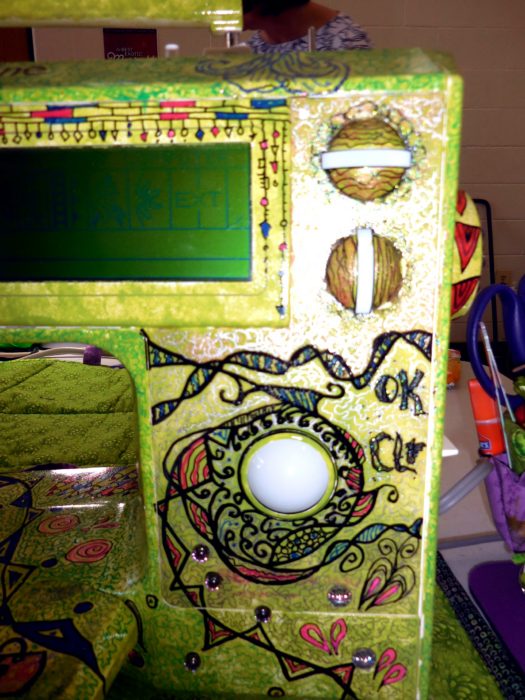
  3. Use Sharpie Poster Paint Markers (not permanent ink) to doodle and draw.
  4. Pam just reminded me:  take your machine outside and spray with clear acrylic sealant to seal the poster paint markings. BTW, this is the reason for the poster paint markers—the permanent ink Sharpies would bleed, she found.
  5. E6000 glue is her recommendation for adhering tiny jewels and other bling.

2front,detail

3front


back

side

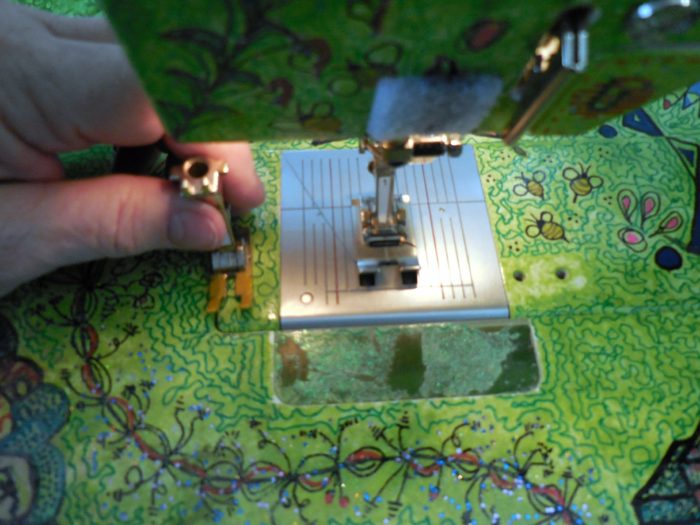
Nail polish in different colors applied to various presser feet makes the one Pam wants to use stand out in the drawer.

presser-ft

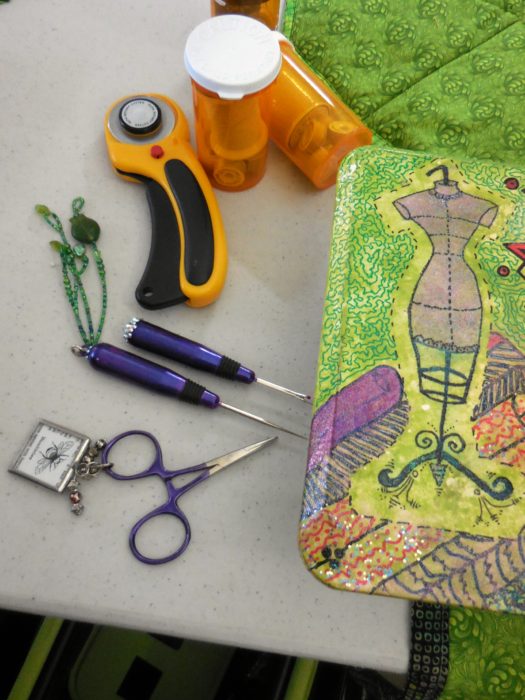
Pam will lend other workshop participants her tools, knowing that as they are clearly identified with her colors and glam touches, she’ll get them back. Also when traveling, Pam stores the spools and coordinating bobbins in translucent pill bottles…a clever organization system if ever I saw one.

tools

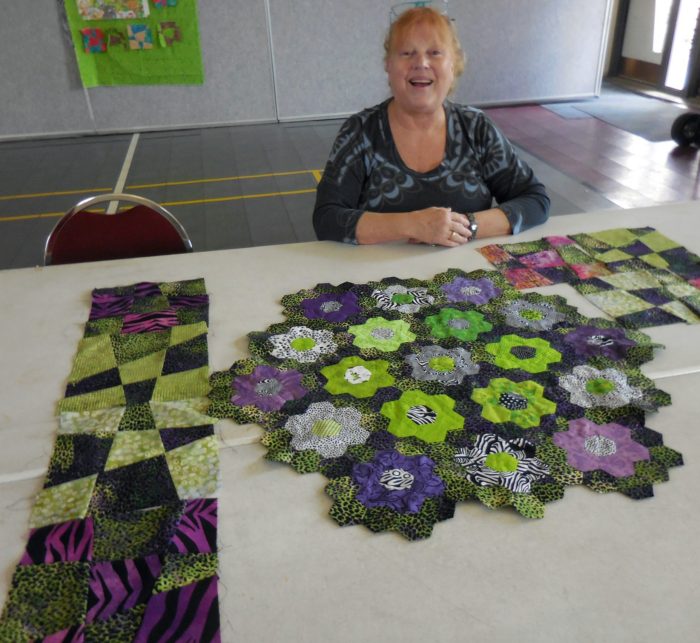
No doubt by now you’ve noticed that Pam is partial to a certain color palette. She made the Wonky Nine-Patch blocks in my workshop, and plans to combine them with her hexies in a complex master-work of an art quilt.

PB,hex


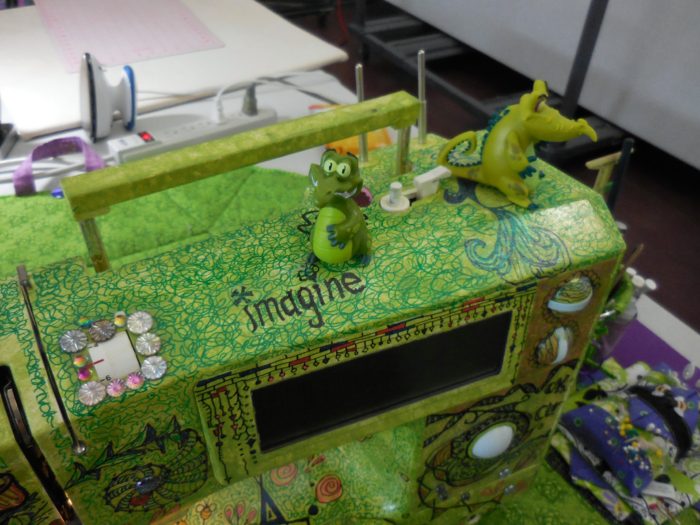
Little gators are her mascots and muses!


top

top,alligator

Is this not smashing?! Would you ever consider pimping…er, primping your machine?

Leave a Reply

Out of Africa? Wearable Art

May 28th, 2016

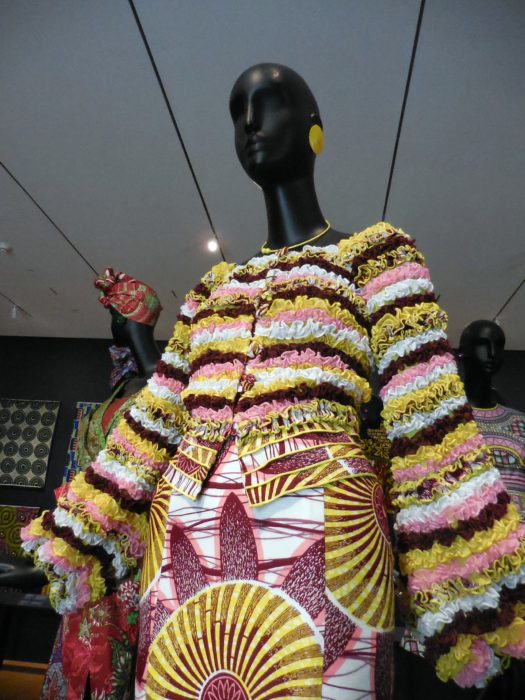
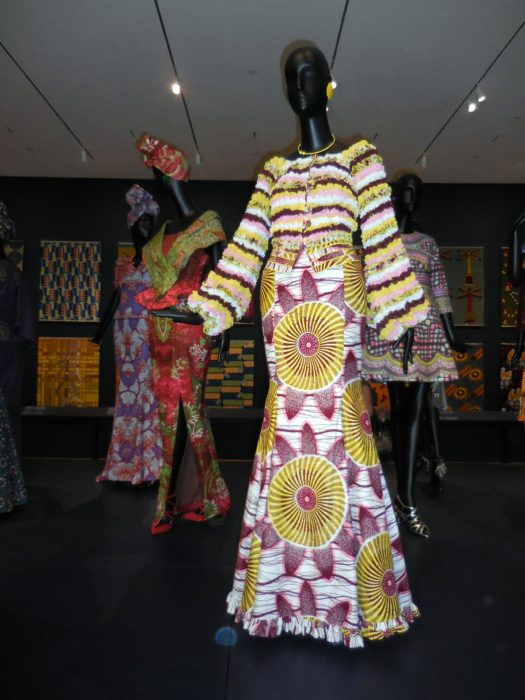
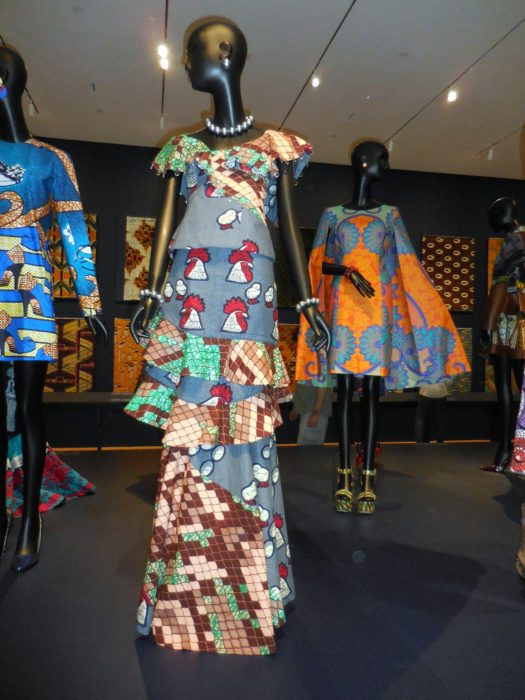
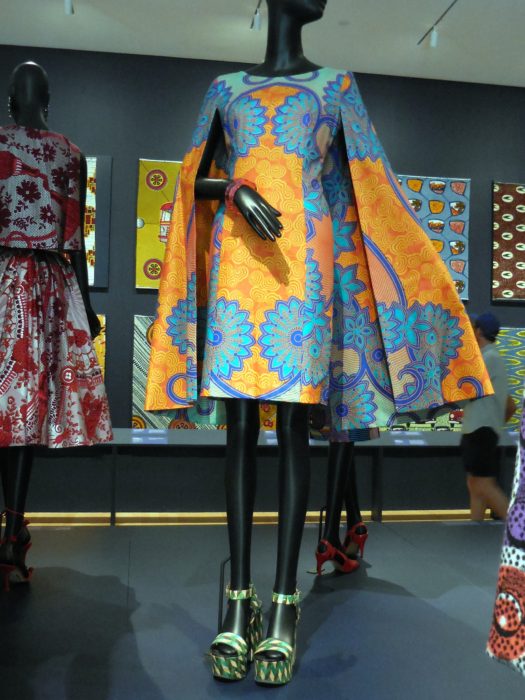
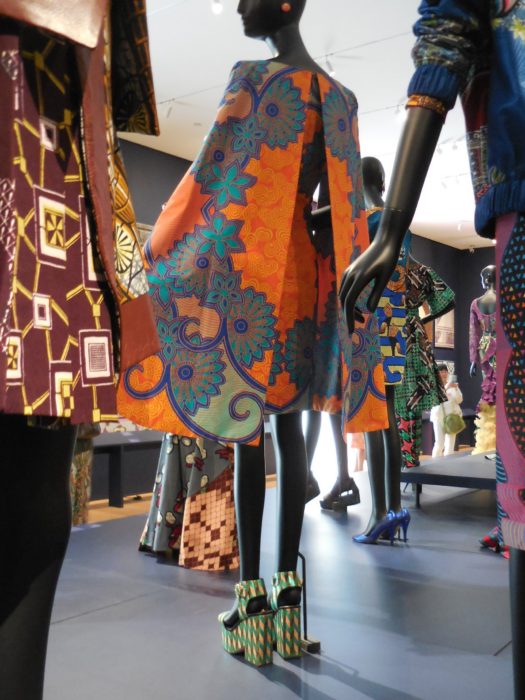
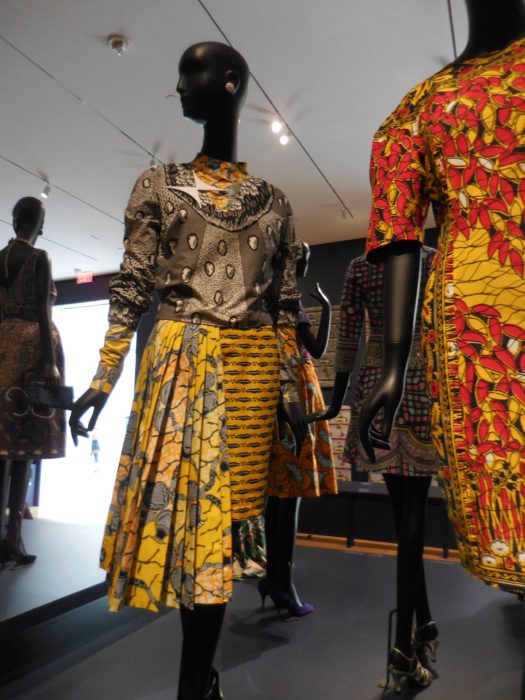
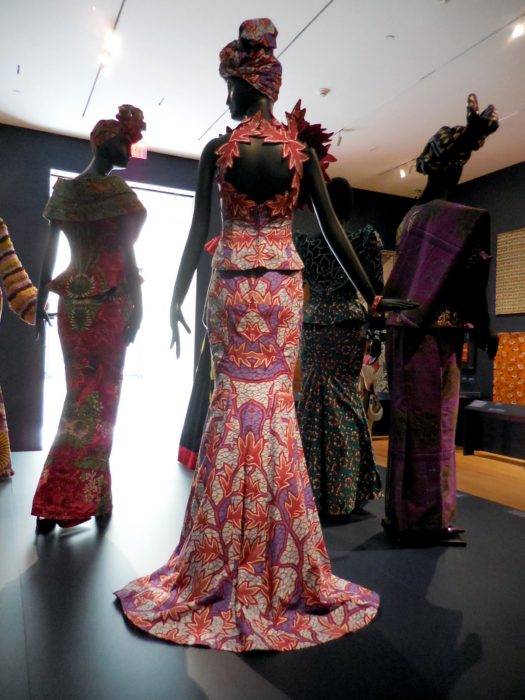
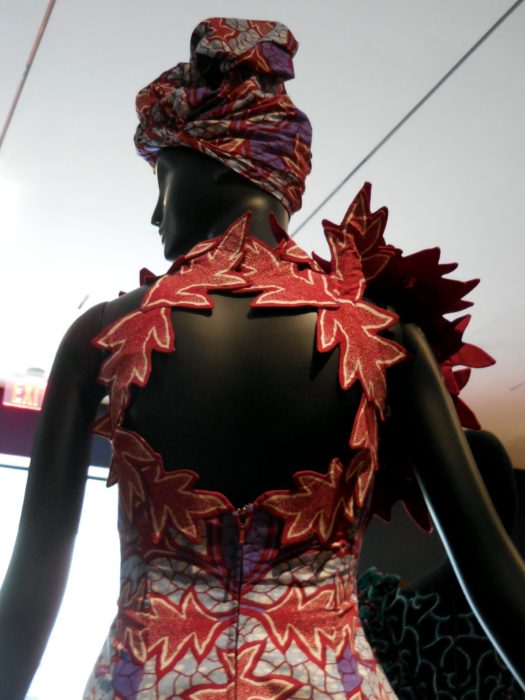
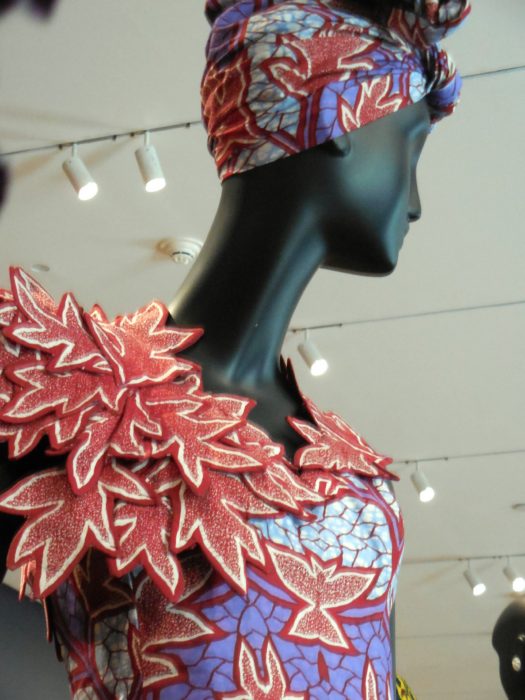
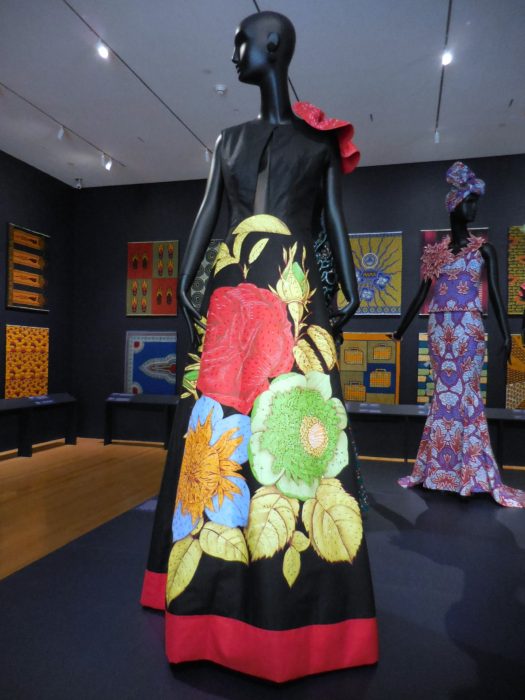
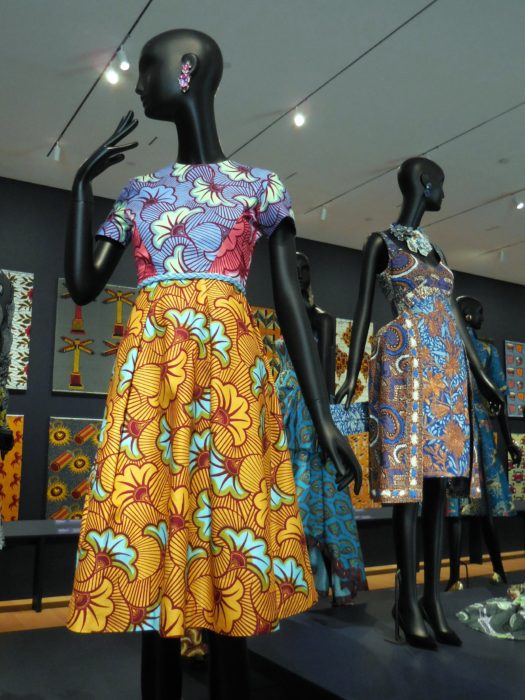
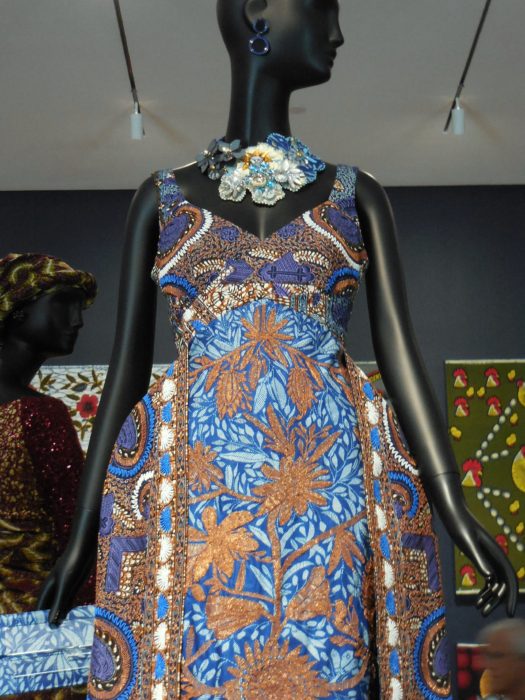
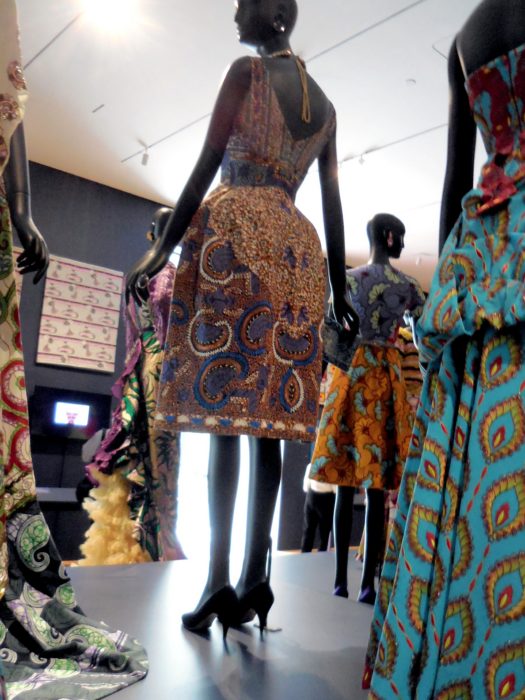
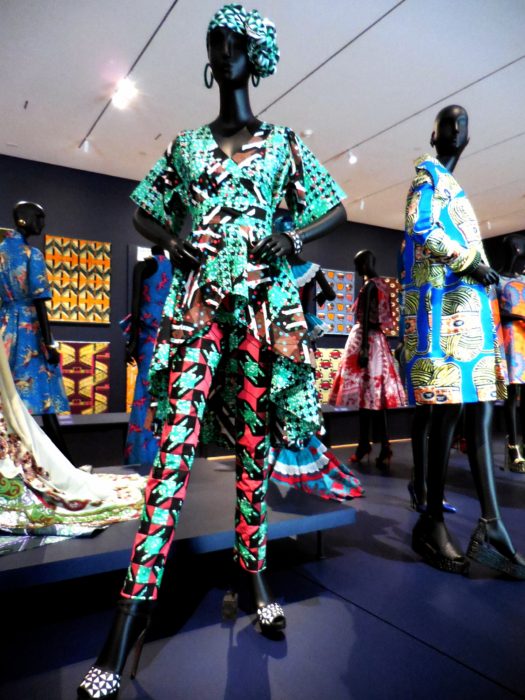
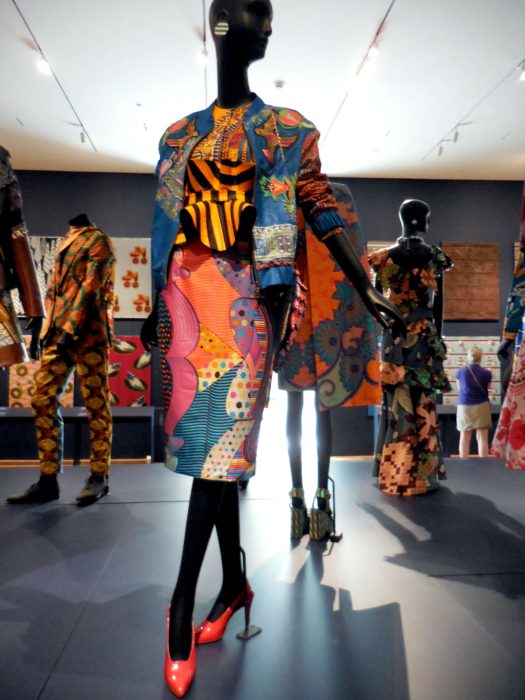
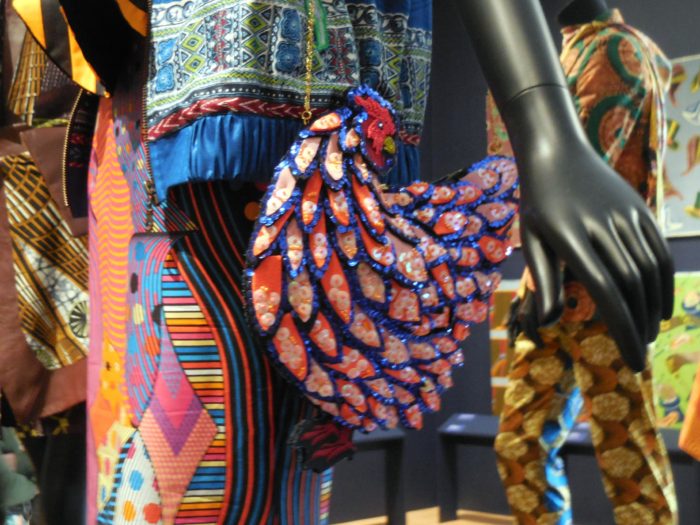
Stunning fashion at the Philadelphia Museum of Art stirs up passions…and questions. Those who know global fabrics have long recognized that the colorful fabrics long associated with Africa come from Europe, particularly the Netherlands. Which begs for an understanding of colonialism and economic exploitation. In any case, Africans as well as Europeans have embraced the fabrics, combining them in ways wild but wearable, even for large ladies.

safe_image

From its website (http://www.philamuseum.org/exhibitions/845.html):
Vlisco: African Fashion on a Global Stage, April 30, 2016 – January 22, 2017

Explore how the Dutch company Vlisco became one of the most influential textile brands in West and Central African fashion and a design inspiration around the world. Known for its bold and colorful patterns, Vlisco creates fabrics that marry tradition with luxury. This exhibition highlights the company’s classic and new designs, follows the creation of a textile, and showcases a selection of contemporary fashions by African and European makers as well as Vlisco’s in-house design team.
The wax printed textiles associated with Central and West Africa have a surprising history. Although consumers in Africa and the diaspora embrace them as African, the fabrics have long been designed and manufactured in Europe, and now in China and India. The most luxurious are the wax prints designed and made in the Netherlands by Vlisco. Shortly after its founding in 1846, the company began exporting imitation batiks to the Dutch East Indies (Indonesia). Three decades later, Vlisco found a new market in West Africa. This exhibition is offered in conjunction with Creative Africa, a season devoted to African art and design.”
Have a look!

DSCN6588

DSCN6599

DSCN6589

DSCN6590

DSCN6605

DSCN6606


DSCN6594

DSCN6595

DSCN6596

DSCN6597

DSCN6598


DSCN6600

DSCN6601

d1

DSCN6603

DSCN6602

DSCN6604


DSCN6607

DSCN6593

Sumptuous, right? Would you wear any of these wow’ems?


12 Responses to “Out of Africa? Wearable Art”

  1. Thanks for sharing this! At my son’s college graduation yesterday, there were quite a few parents in African regalia – absolutely incredible dresses, colors, headdresses. This is very interesting information. People had brought me fabric they bought in Africa that was marked “made in Holland.” Fascinating!

  2. Barb L. says:

    My uncle Joe was ordained a Catholic priest and promptly moved to Tanzania on the eastern coast of Africa in 1964. He went to live with the Massai people, they lived several hundred miles inland.. He has lived and worked there his entire life. For a long time the villages he lived and worked in were in the bush, accessible only by jeep and hiking.. Of the many souvenirs he brought home on visits, there was always cloth. His sisters would make skirts and my mom kept hers as she always planned to make a quilt with them. I was very grateful to inherit these fabrics. They couldn’t be more different than the ones in the exhibit. There were a few photographs that showed the Massai women in the same fabrics. I don’t believe they could have been made in Europe as for a very long time the Massai people were completely self sufficient. I will have to take a look at the selvage to be sure.

  3. Thank you for your wonderful photos – these are gorgeous patterns and clothing! We have to remember that Africa is a huge continent with many countries and cultures. The ones in this exhibit are designed by the Dutch mfg. There is a lot more to African clothing than this type of print.
    I loved the orange, turquoise and periwinkle dress! Where I live, LLBean is the style, so I don’t see myself wearing any of the clothing. The bright colors tend to look best on African American skin. The patterns remind me how drawn I am to very graphic designs and they might inspire something in my own art quilts. Thanks for sharing Elly. It looks like it would be worth the 5 hour drive to go see it!

  4. These are absolutely FASCINATING! What country in Africa are these from? Aparently one connected with the Netherlands?
    We Quakers have an orphanage in Kenya. I have not seen any photos of clothing with these wild prints. I have seen stunning clothing on some of the women. Of course the childen wear either school uniforms or what we send them.
    Because I am fair skinned, those wild colors would overwhelm me. However, I think I could spend a few hours looking at this exhibit. I LOVE the details such as that wrist ‘ruffle’, the cut outs around the neck and back, the fabric covered HIGH platform shoes [could break a leg falling off those], the slim pants [extra large for me would have a totally different look], the arrangement of designs motifs, etc.
    Thanks so much for treating us to this wonderful exhibit!

    • Eleanor says:

      You are absolutely right on so many points! I have pasty white skin, but frizzy curly hair–a Jew-fro, but feel a bit guilty when I appropriate African styles…much more than Japanese, Chinese, or other cultures’ garb.

  5. Judy Anderson says:

    FABULOUS! Thank you forsharing these photos.

  6. Heidi Lund says:

    Absolutely stunning wearable garments! The color, the fabric, the designs, wow. It must have been wonderful to see them in person. They are each equally unique and the African prints lend themselves not not only be eye catching but dramatic. I love the one with the red leaves framing the back, and shoulder.

  7. I used Vlisco in my first major quilt, a Mariner’s Compass queen sized, as we lived in central Africa at the time. I have two outfits (which alas do not at this time FIT) in these glorious fabrics, and more fabric in my stash. I’ve put this on my calendar–we deliver our son to college for Freshman year and YIPPEE the exhibit will still be on in August, so I have already pled with hubby to take an extra day and take the train from Lancaster to Phila. just to see this! Thanks for the preview, Sarah

Leave a Reply