Eleanor Levie HomeAboutEditorial ServicesBooksGallerySpeaker TopicsWorkshopsPast BookingsFree StuffLInks Contact Me

Inspiring Quilting: Elly's blog to boost your creative IQ

Archive for the ‘Art + Quilt’ Category

Art Quilt / Trad Quilt

Thursday, October 1st, 2026

Distilling the comparison of my previous blog…
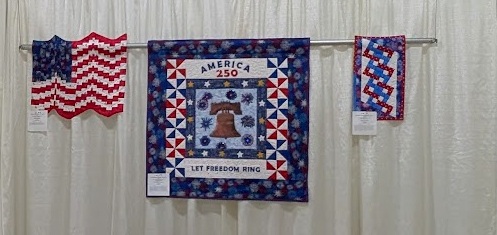
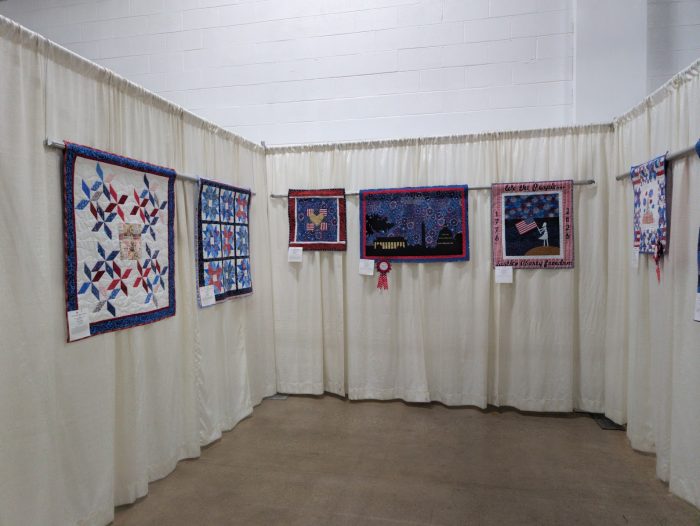
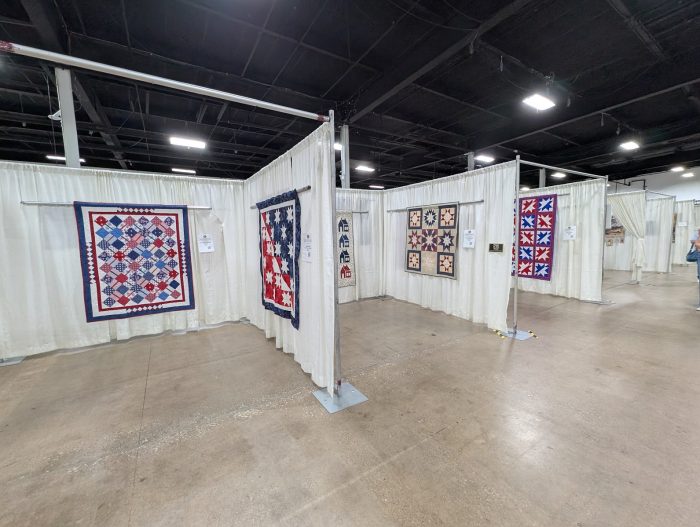
Here are three wall hangings celebrating the 250th at Pennsylvania National Quilt Extravaganza, from a challenge by a Pennsylvania quilt guild. From left to right: A bargello version of the flag, a center medallion with borders, and a small rectangle of even, geometric blocks. Each is an original design, well-constructed, crisp and neat.

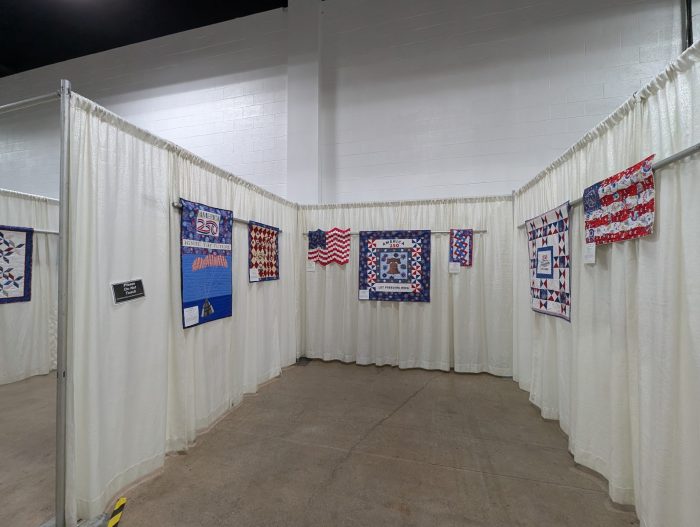
Now take a look at three art quilts from Art Quilters Celebrate Independence, a juried exhibition by Studio Art Quilt Associates of Pennsylvania, also in honor of the 250th. Each features symbolism depicting a particular point of view:
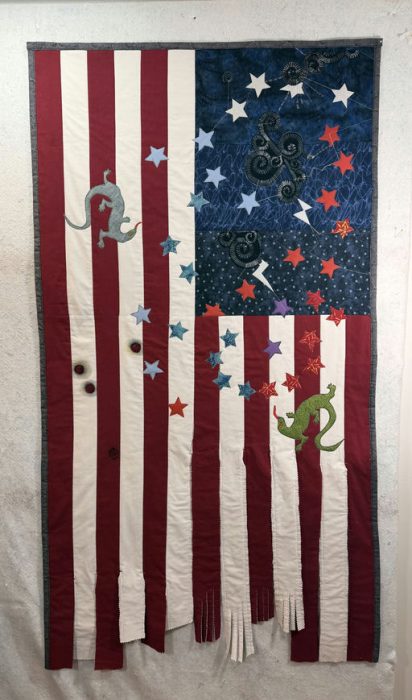
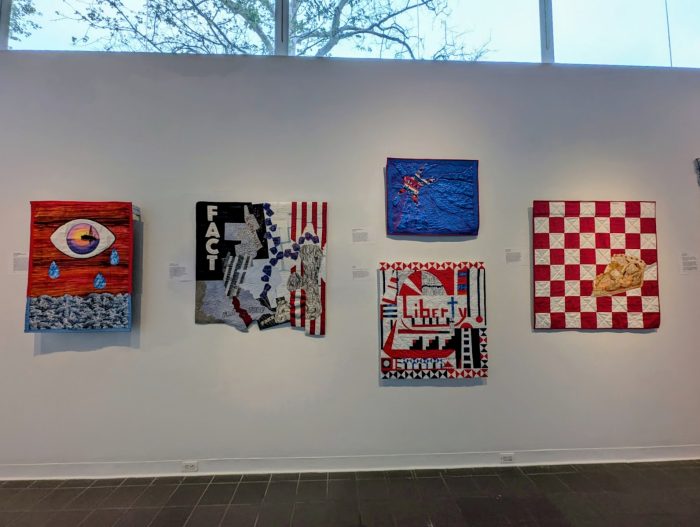
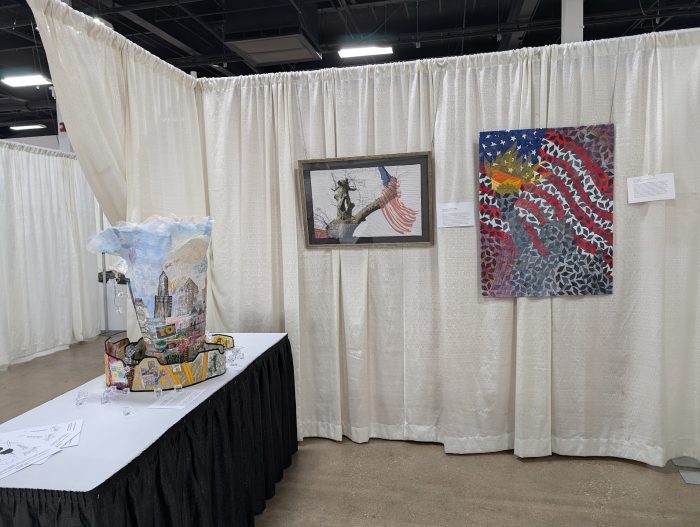
Faded Glory, by Frances Anne Frederick –This version of our flag shows the grandur of Old Glory diminished, with falling stars, lightning bolts, bullet holes, noxious creatures, and ragged edges.
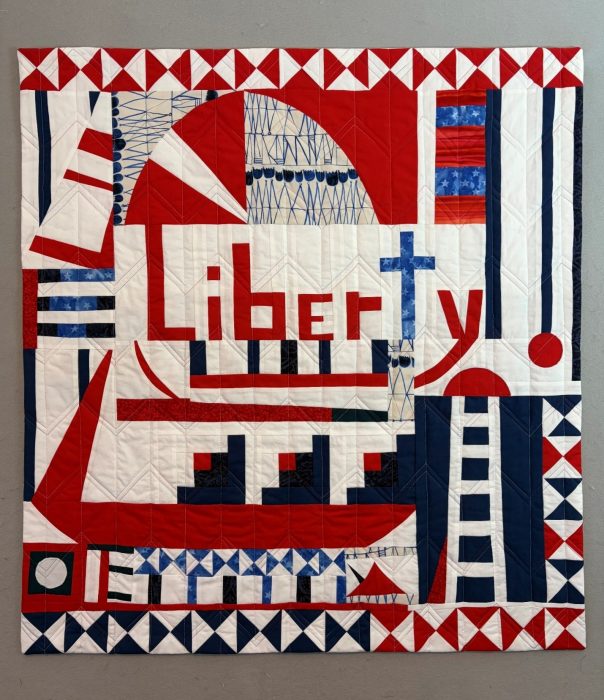
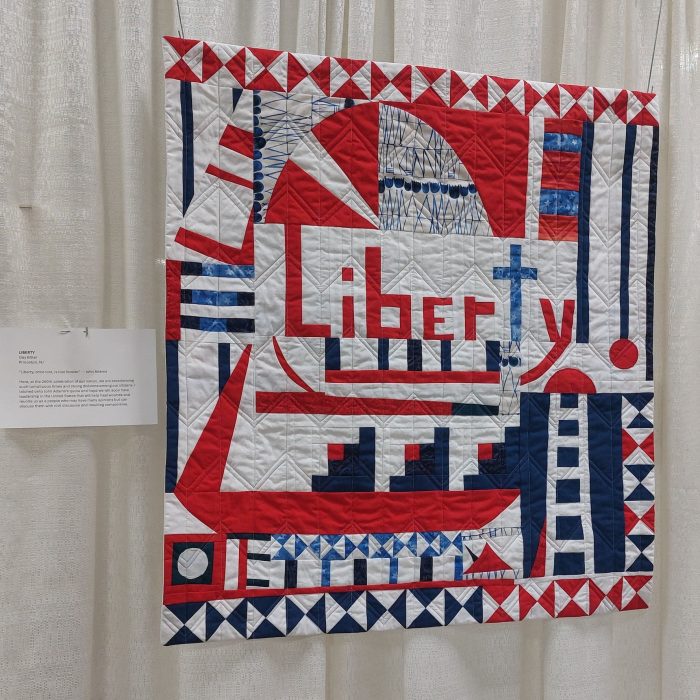
Liberty, by Gay Bitter, has similarities to the traditional medallion in the first photo: center pictorials and text, surrounded by perfect patchwork blocks. However, Gay has deconstructed the Liberty Bell –its dome on the top third, its clapper on the right, her bowtie/hourglass blocks depict the red states mostly separate from the blue states, and she and latches onto a quote from John Adams: “Liberty, once lost, is lost forever.”
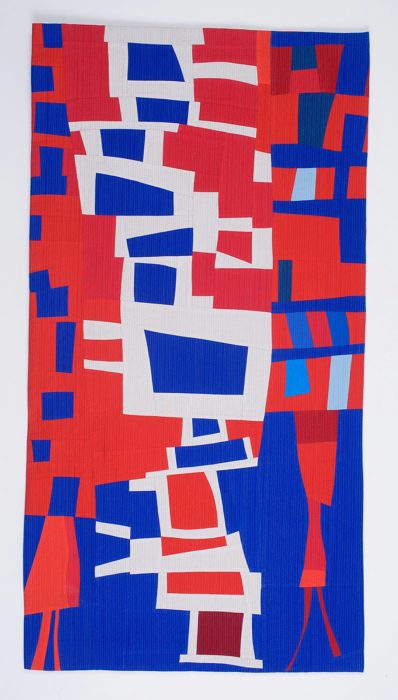
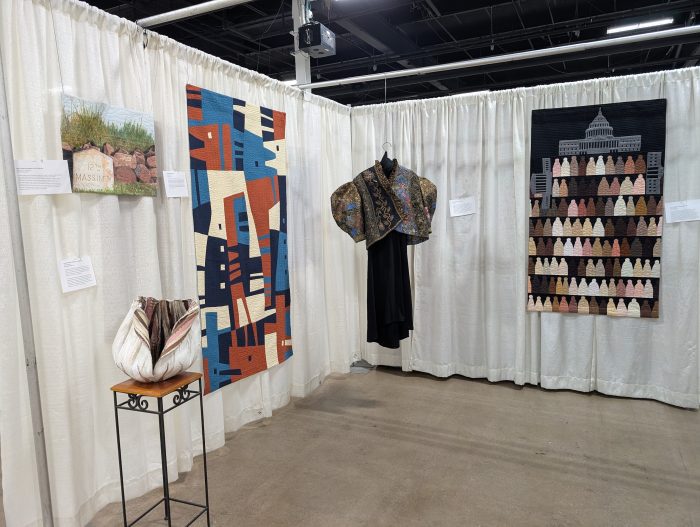
Keystone, by Peggy Black, is made up of patchwork blocks like the geometric design in the top photo on the right. However, here, an improvisational construction takes the place of repeat blocks, rendering the work a sophisticated abstract. Also, there’s meaning: down the vertical center, the blocks symbolize the 13 colonies, with Pennsylvania, the blue quadrangle in the center. Pennsylvania is called the Keystone state, and that architectural term refers to that block at the top of an arch that unifies and holds all the other blocks together…Just as Pennsylvania operated as a political center for early colonial resistance.

What other distinctions can you make between traditional quilted wall hangings and art quilts?

Please leave your thoughts in a comment below!
Art Quilts and Wall Hangings for the 250th

Monday, September 28th, 2026

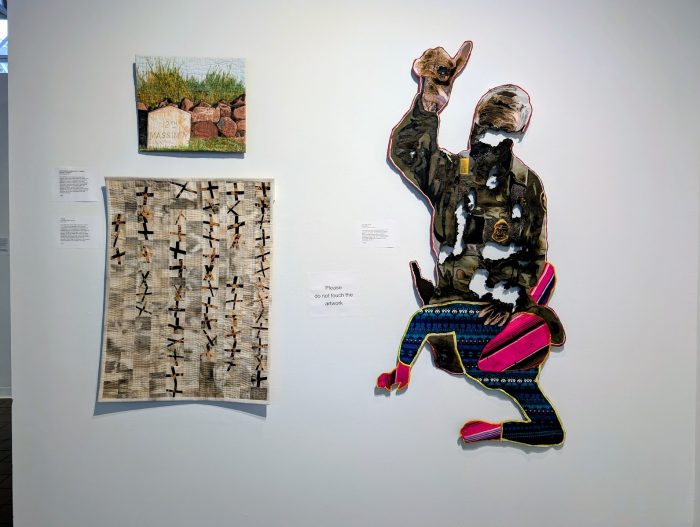
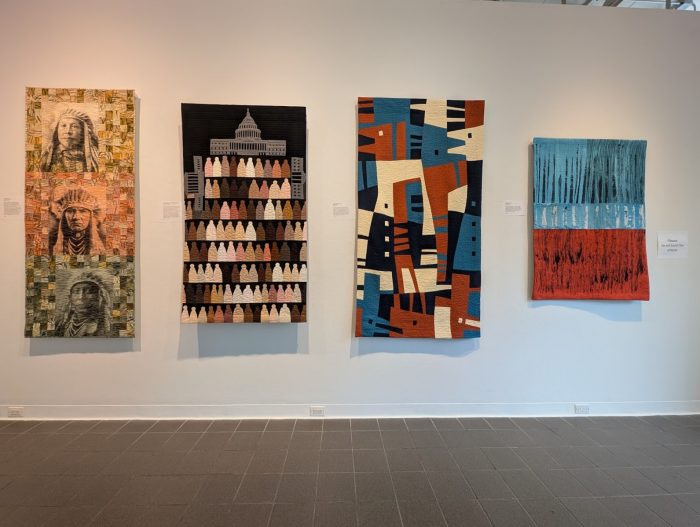
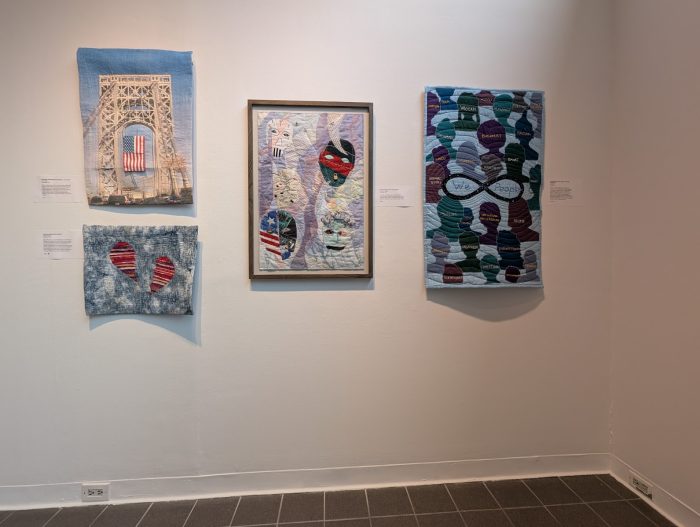
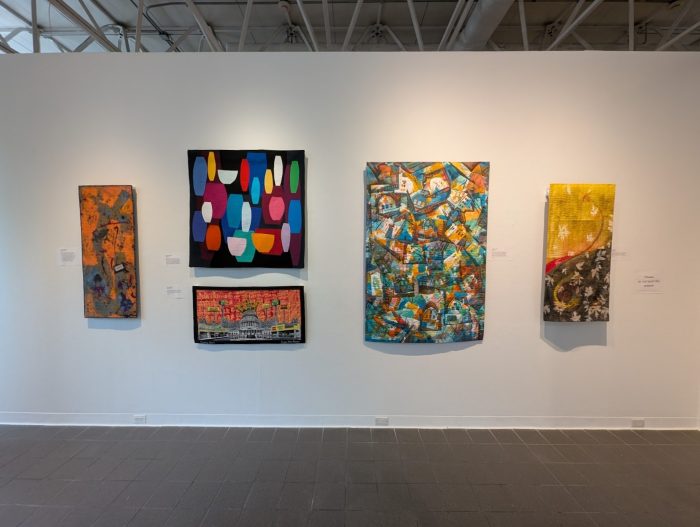
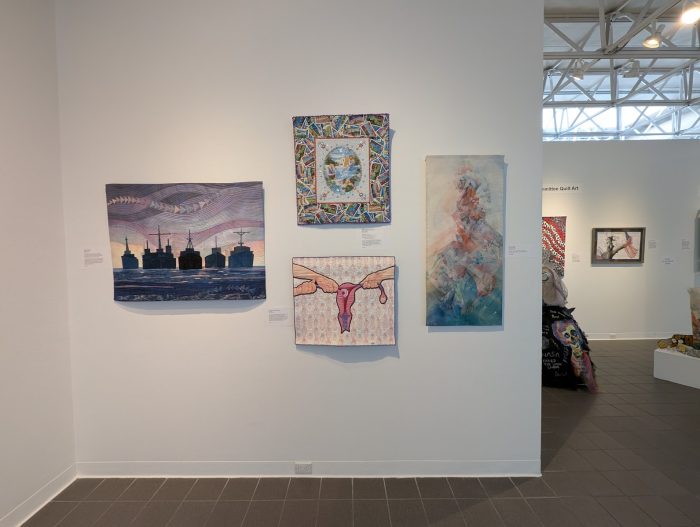
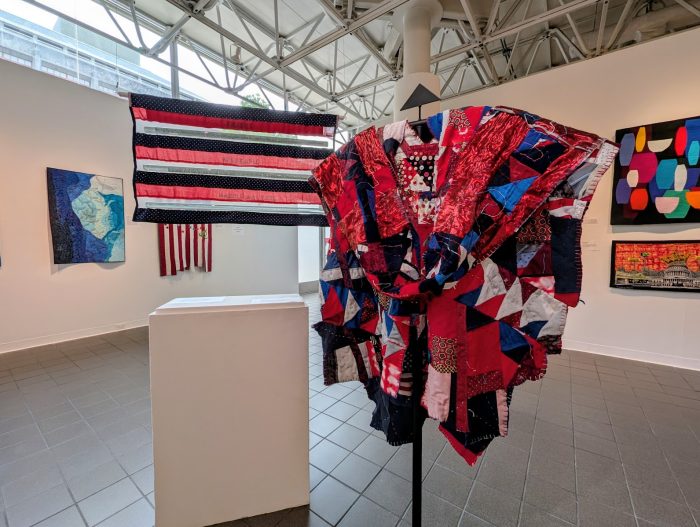
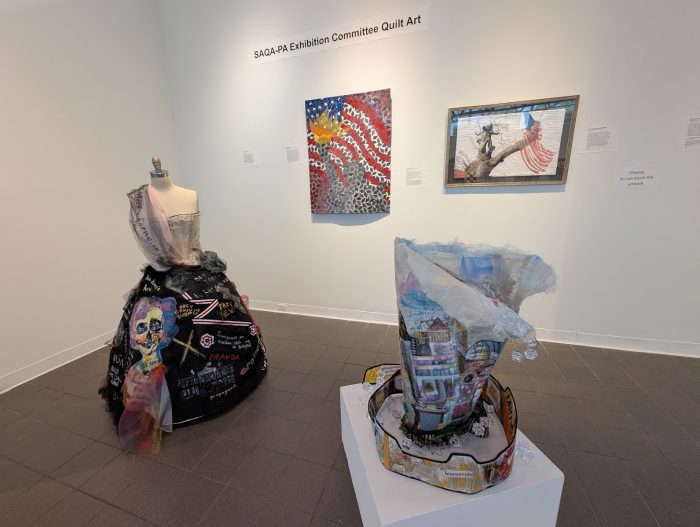
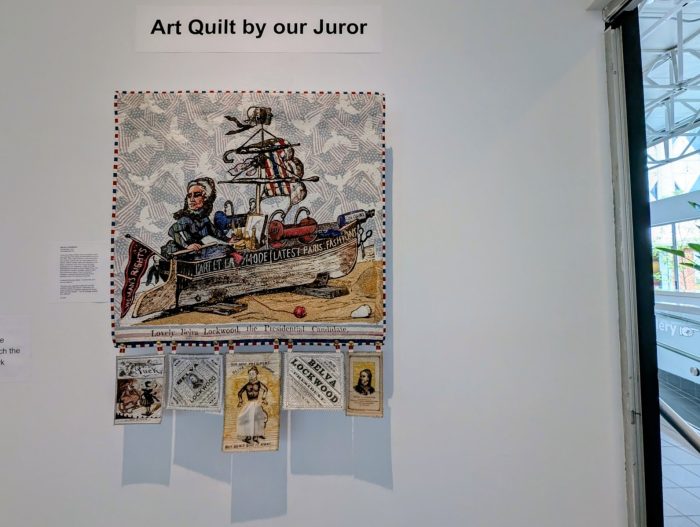
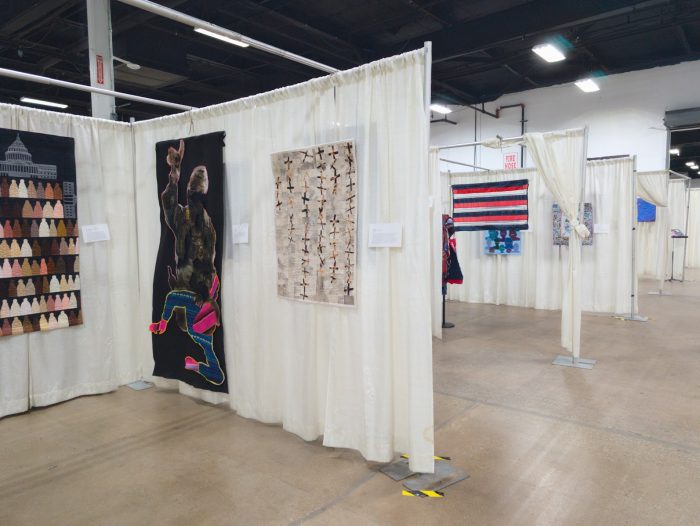
So proud of curating, along with my team, a juried, regional exhibition of art quilts from Studio Art Quilt Associates of Pennsylvania. Innovative fine art in the medium of quilting. This exhibition had a fabulous premiere at Moore College of Art & Design in Philadelphia, the summer of 2026, where professional installers helped our volunteer committee do great justice to these artworks. First seven photos here are by Alden Cole:

In mid September, the exhibition went on to the Pennsylvania National Quilt Extravaganza in Oaks, PA. Our team altered the arrangement to fit a series of curtained cells.

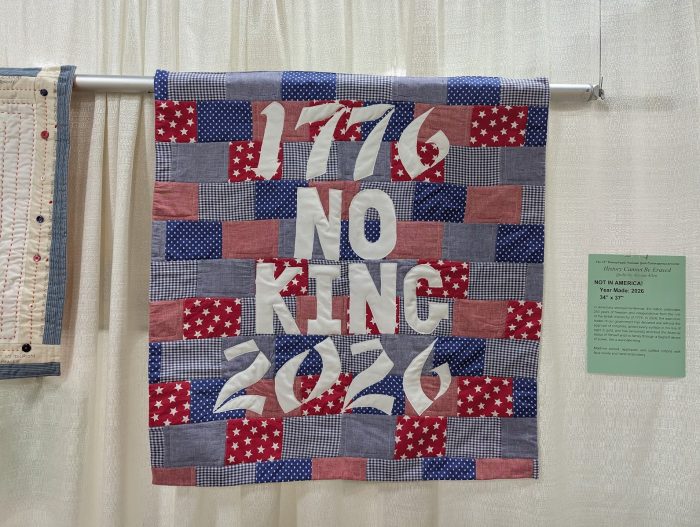
There were many traditional quilt guilds that took up the theme of our semiquincentennial. The contrasts with our art quilts were striking: patterns were symmetrical and based on patchwork blocks. Red, white, and blue flag palettes, plus lots of stars and stripes, heralded the auspicious anniversary of the Declaration of Independence, but went no further in commenting on the state of the union…except for that last patchwork quilt with a political message. Art quilt? Or a banner fit for carrying in a rally declaring independence in 2026?

Newest, biggest trash-stash art quilt!
Friday, October 4th, 2024
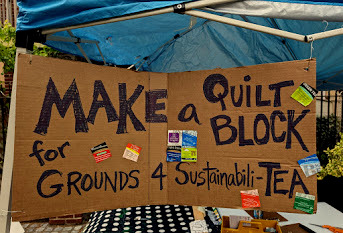
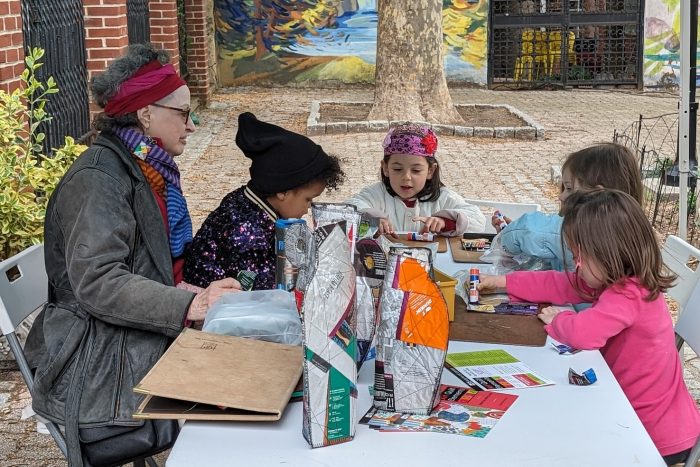
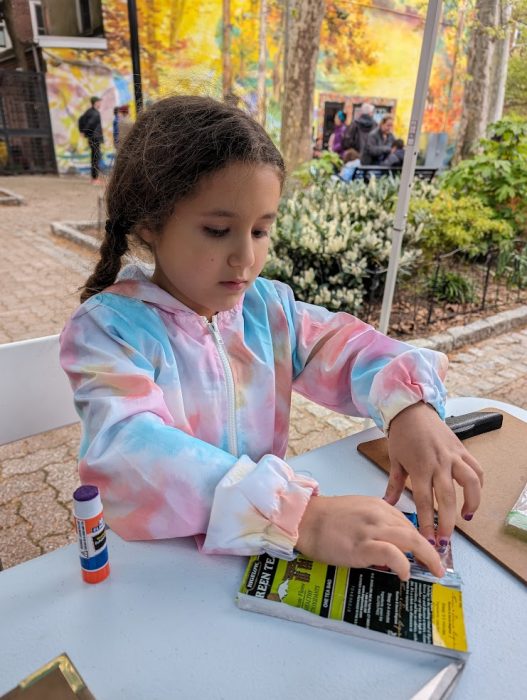
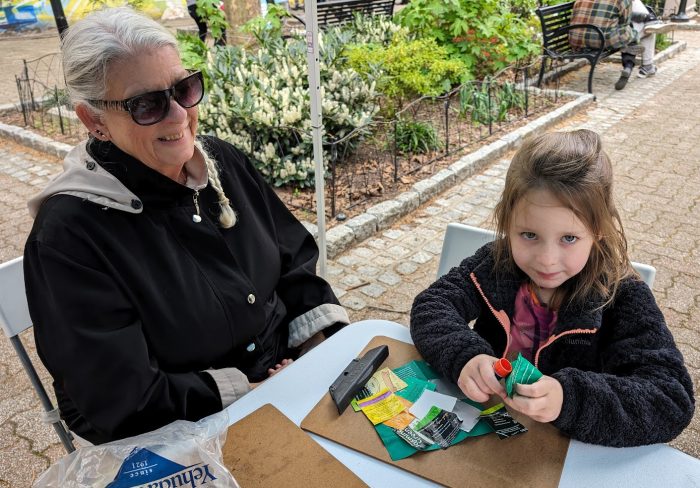
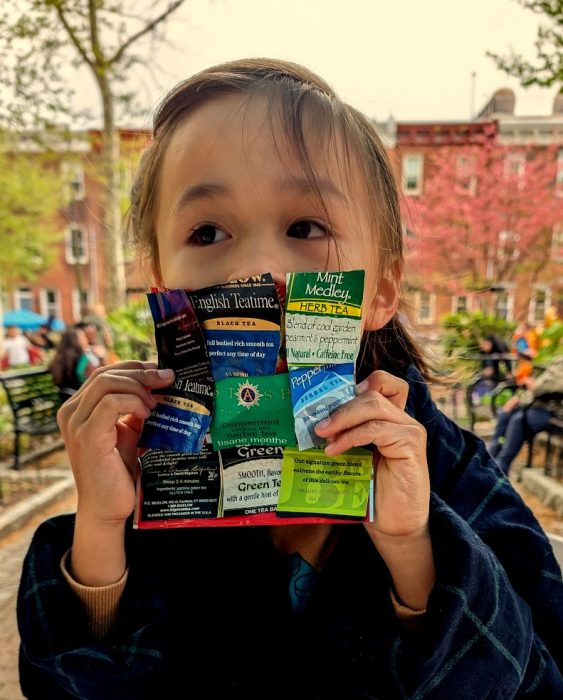
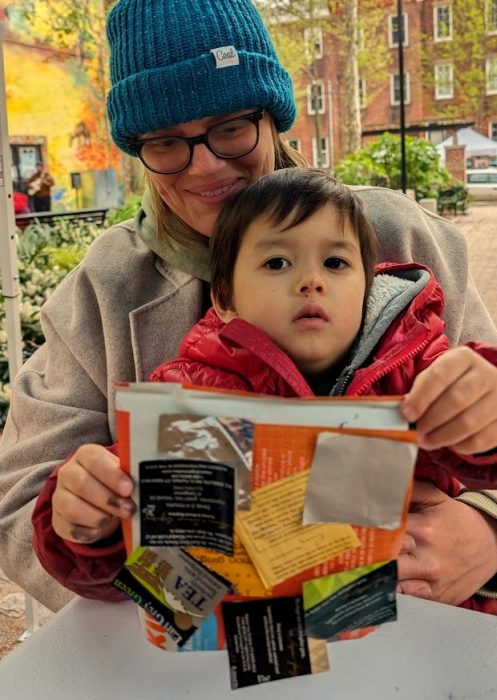
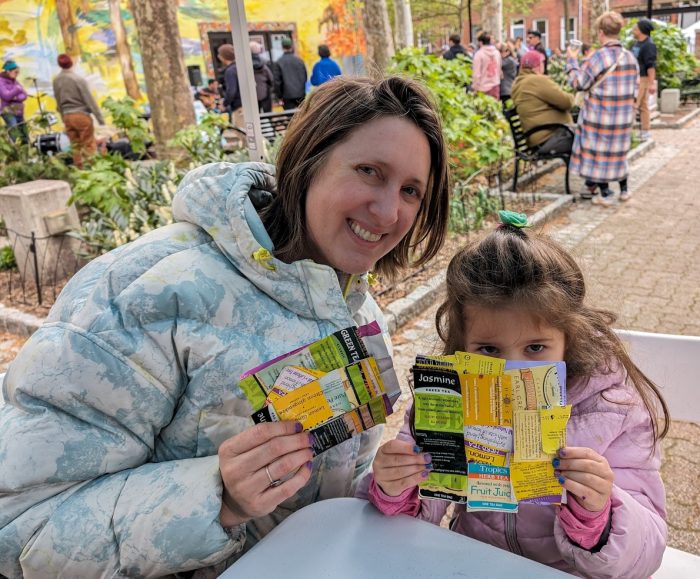
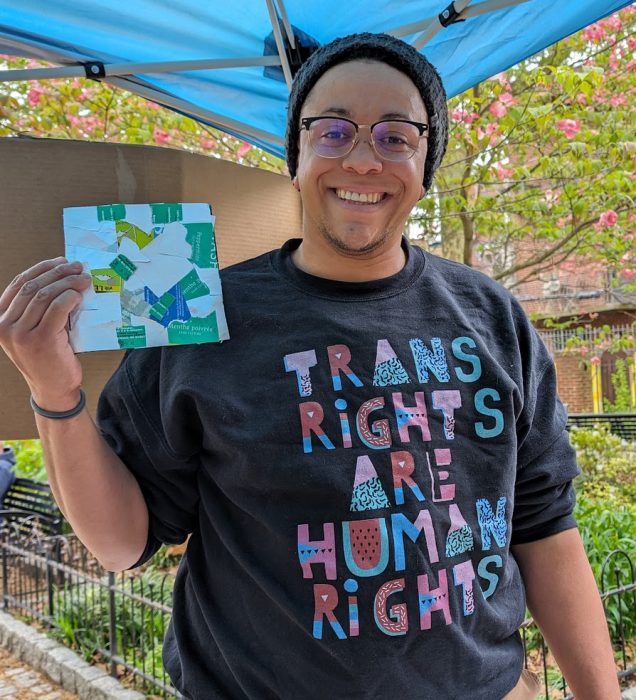
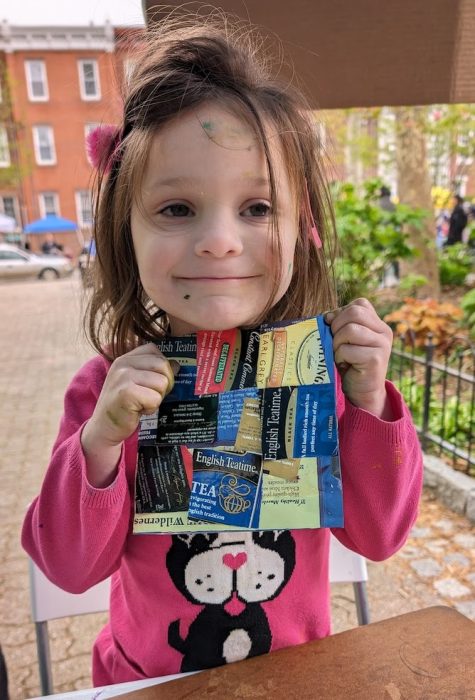
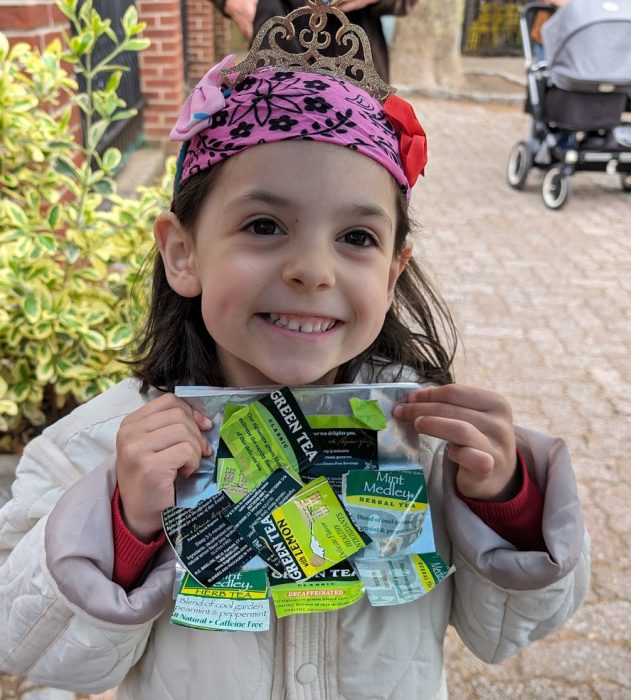
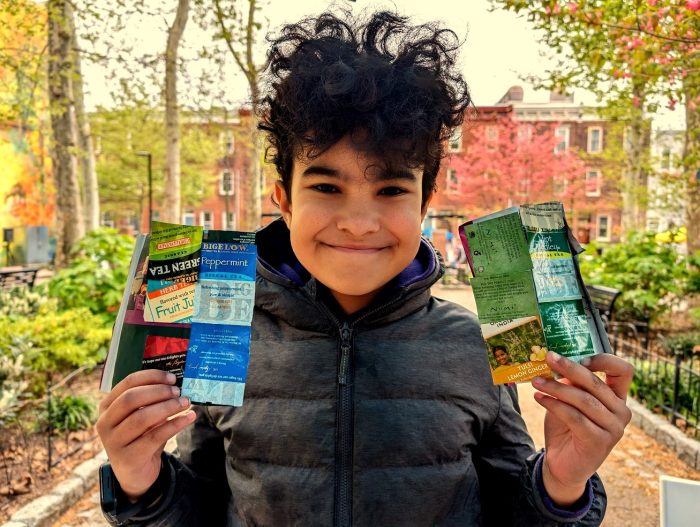
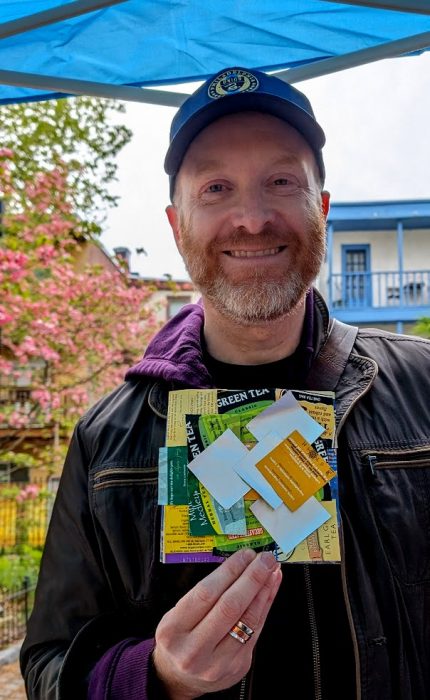
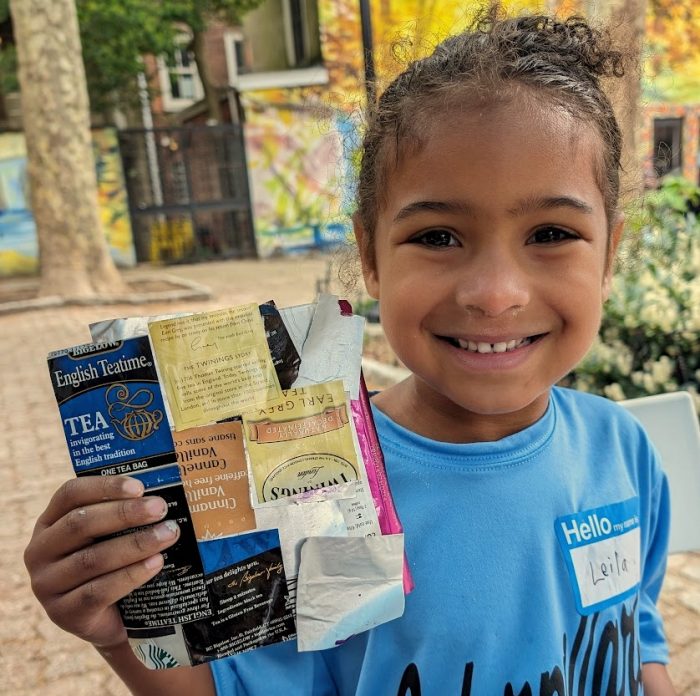
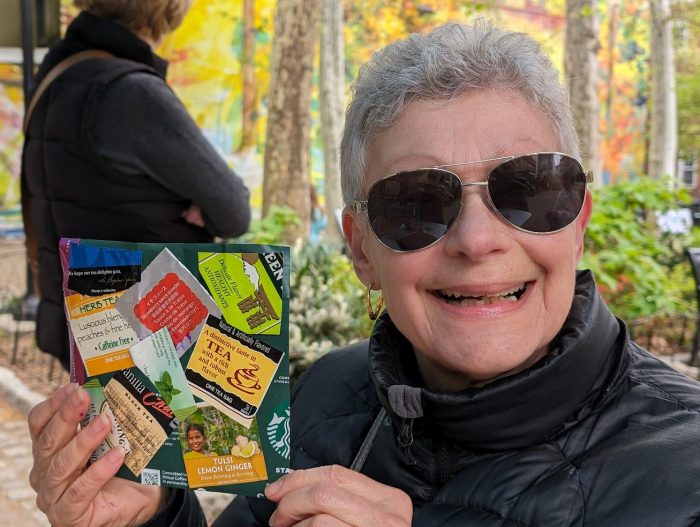
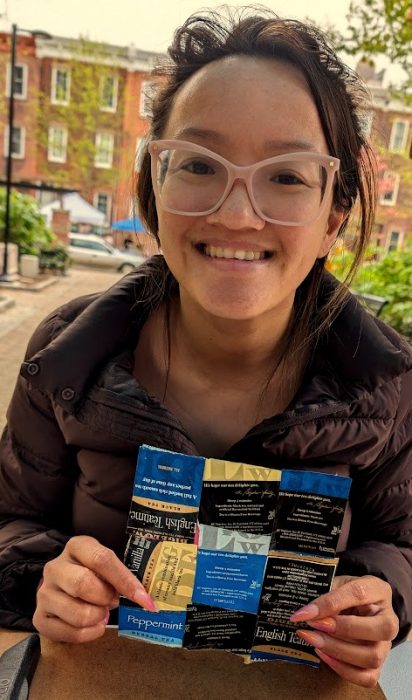
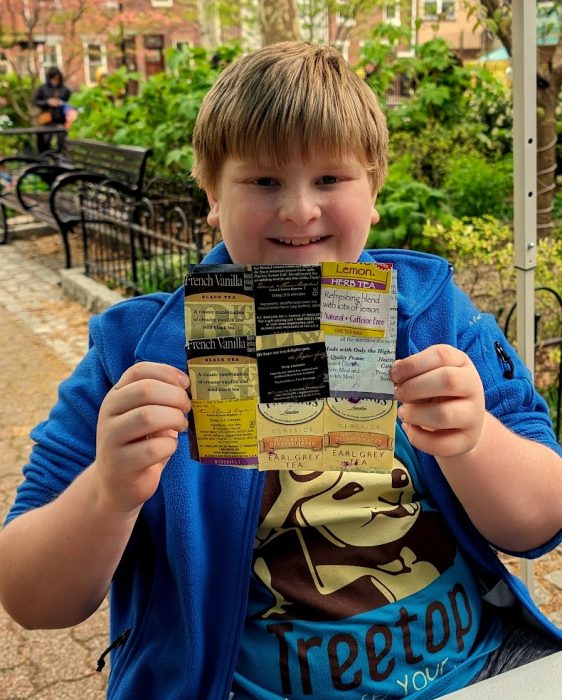
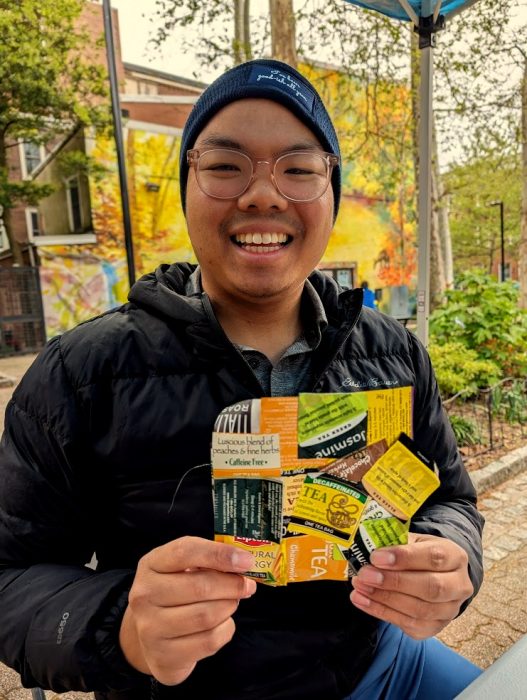
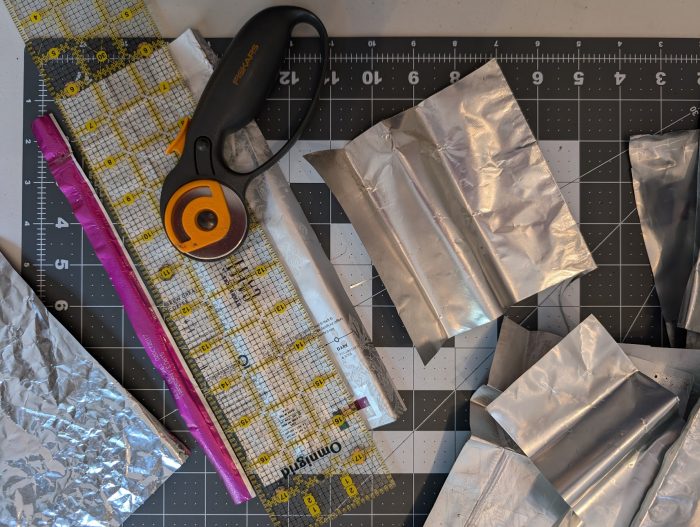
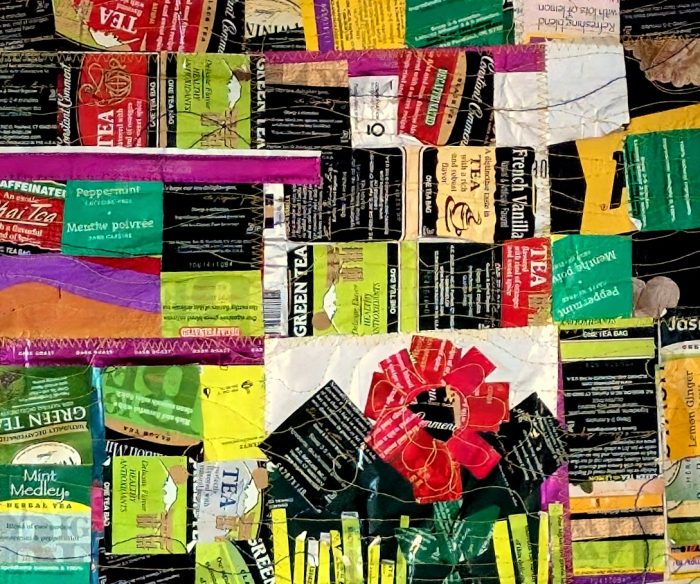
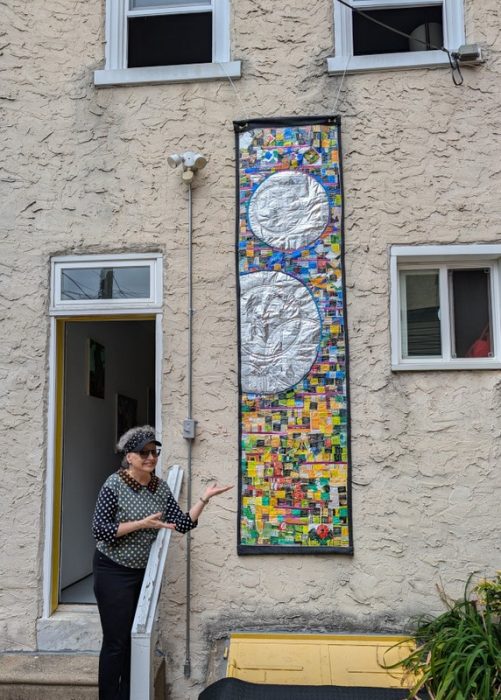
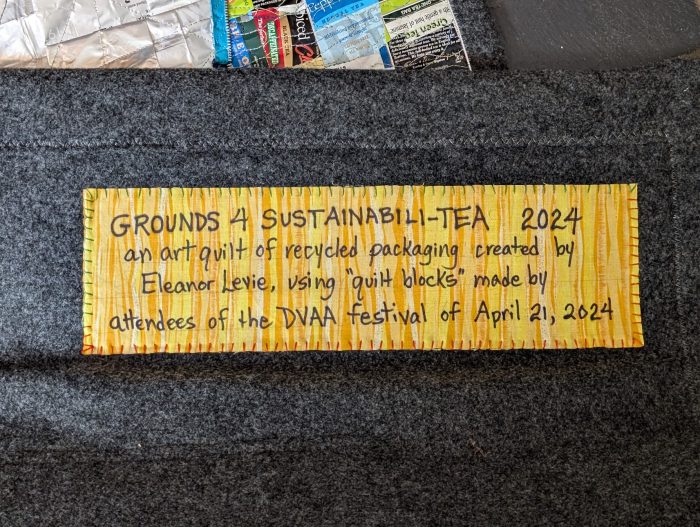
My booth at Da Vinci Art Alliance’s Everyday Futures Fest, April 21, 2024, which featured the theme of Sustainability, welcomed crafters of all ages. Supplies: 6″ squares cut from coffee bags (coffee GROUNDS), and 2″ squares cut from single-serve TEA bag packaging, glue sticks.
Participants, a multi-generational, diverse group, needed very little guidance from me.

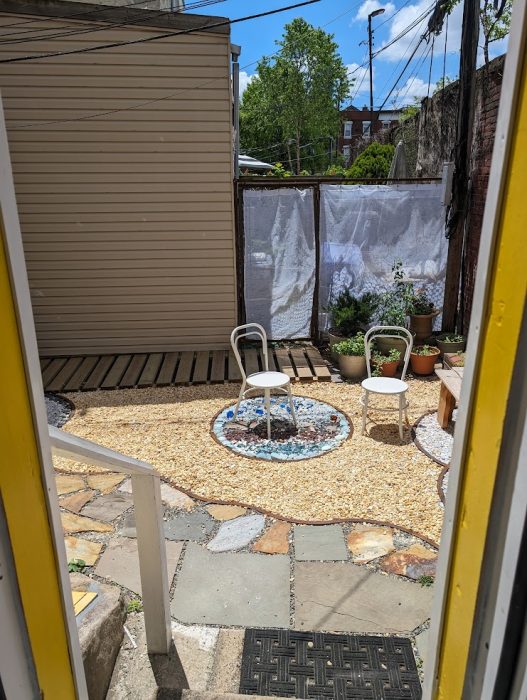
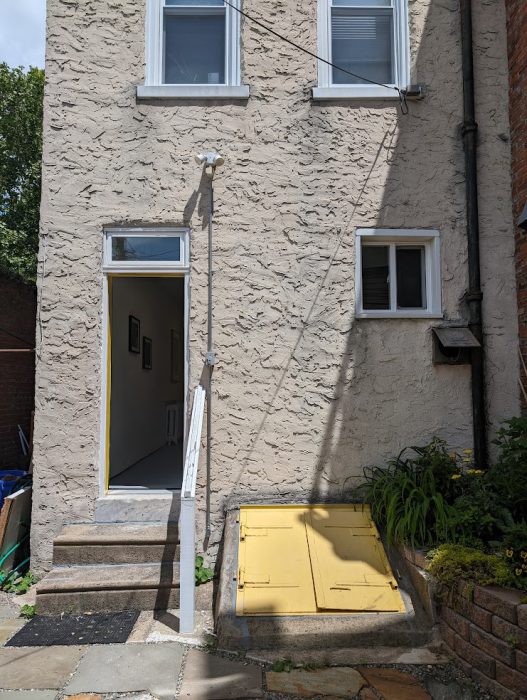
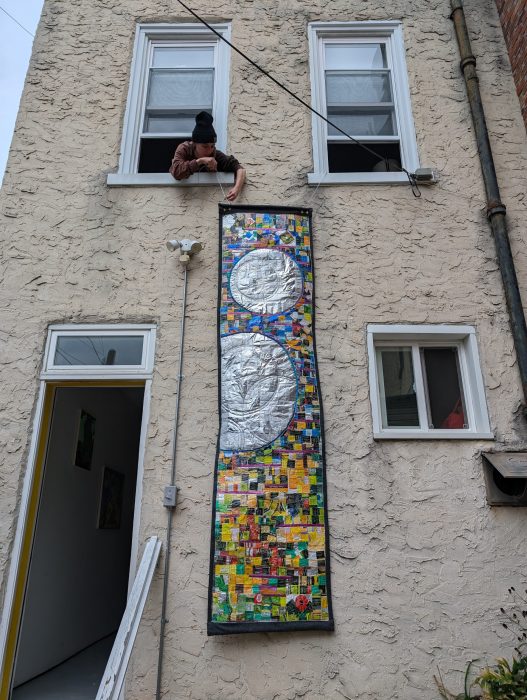
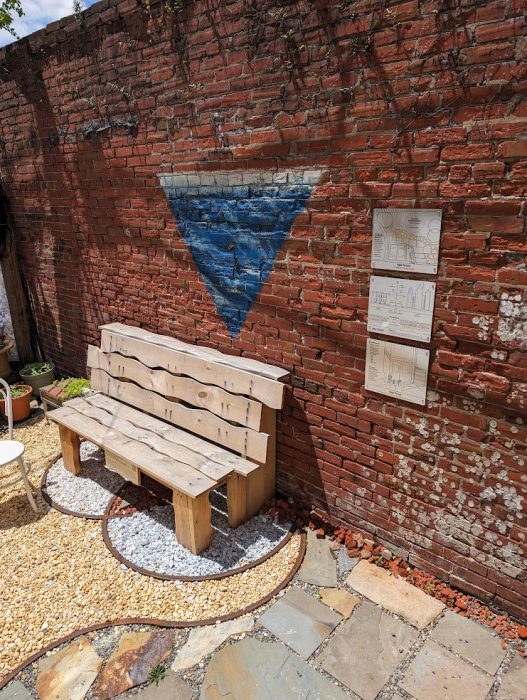
Next, I chose a site for the trash-stash art quilt, which would give me the dimensions. Nancy Agati’s Aqua Terrace at Da Vinci Art Alliance was the perfect space, since this work would withstand the elements. We chose the long, narrow wall alongside DVAA’s back door, above the basement doors.

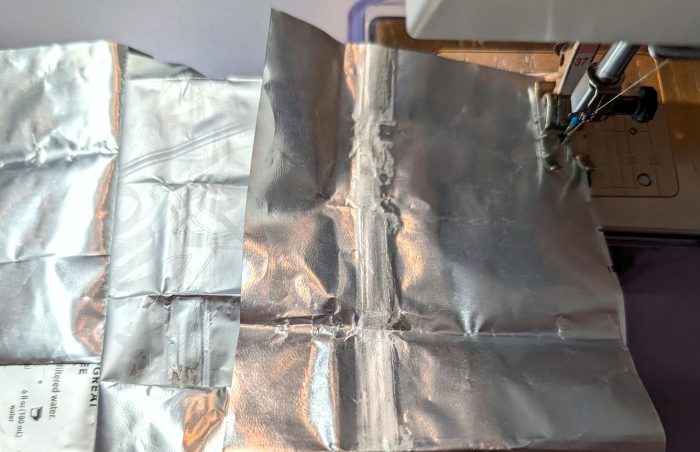
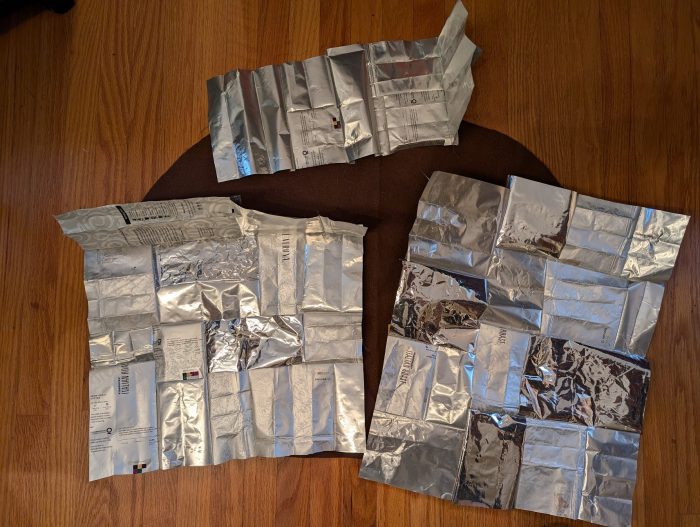
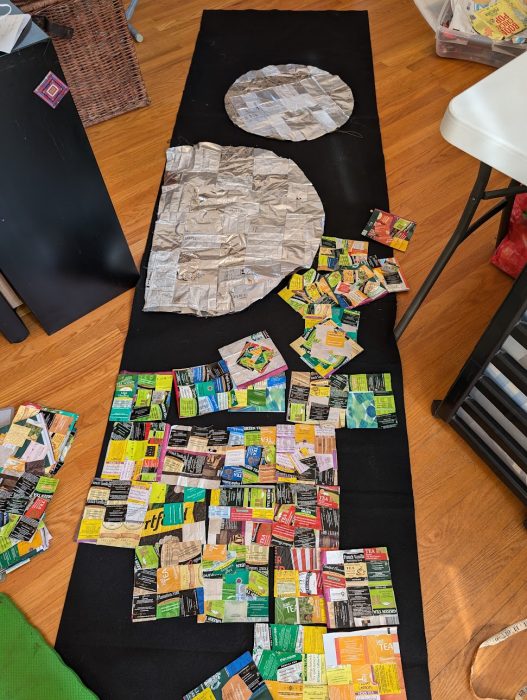
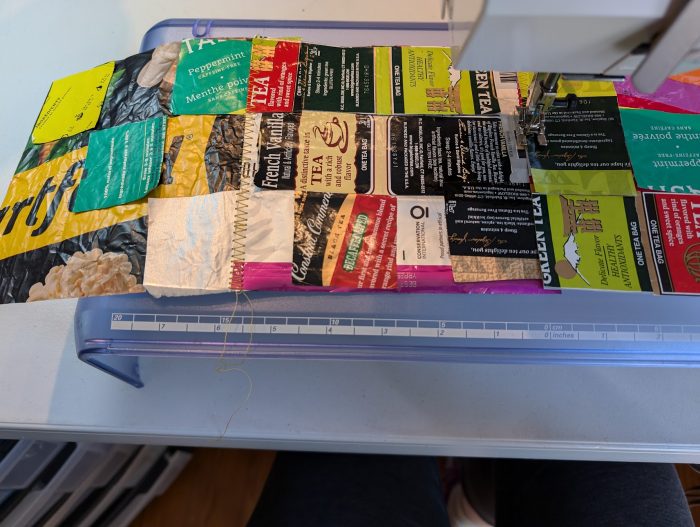
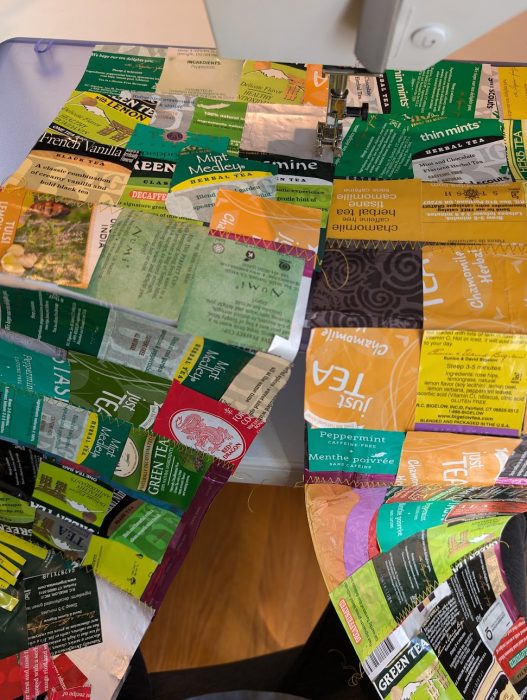
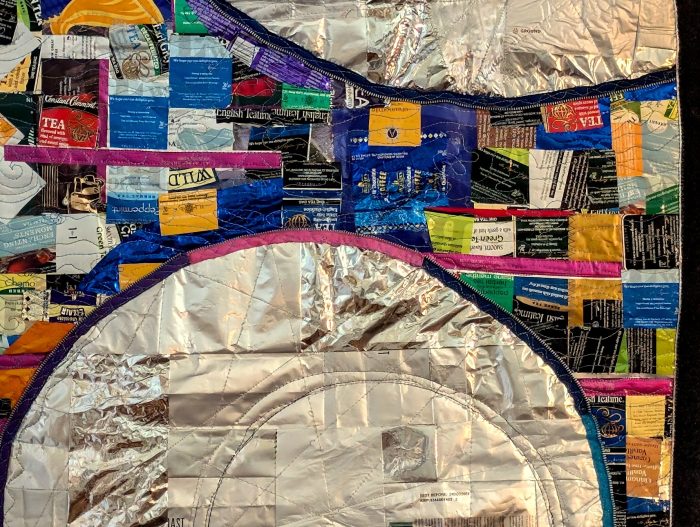
I cut a piece of Eco-felt, which is made from recycled plastic bottles, to the size of the final art quilt. Inspired by the mosaic circles on the Aqua Terrace floor, and in order to prevent the design from becoming too busy, I decided to give the viewer’s eye a place to rest: two large silvery moon shapes, made using a stitched patchwork of coffee bags and other foil-lined packaging. Then, I arranged the blocks around these circular shapes. When I was satisfied with the arrangement, I stitched the blocks together into rows, and then I stitched the rows together into sections.

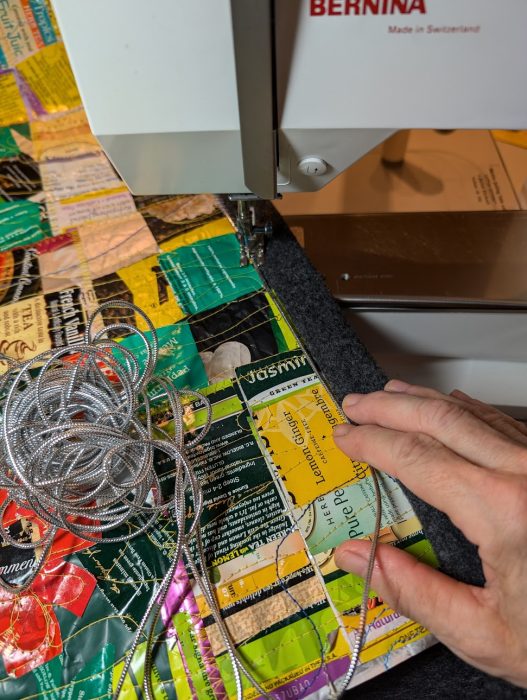
I quilted heavily along the tea-bag envelope squares, and left large areas of the moons without quilting, so they would be puffy. Recycled zippers accented the circumference of the moons. Everything was backed with another layer of felt, cut 2″ larger all around, with edges folded to the front to form a binding. I dressed up the folded edge by couching silver cord as I secured the felt edge. Four grommets–which may have been the hardest part of the quiltmaking for me–allowed the piece to be hung. Samantha Connors, Executive Director of Da Vinci Art Alliance, hung out the office windows to do the mounting.

Entangled

Thursday, April 25th, 2024

It’s a wonder I was able to submit this art quilt on time for the call for entry into Art Quilt Elements 2024 at the Wayne Art Center. It’s a wonder my piece was juried into this very pretigious exhibition which runs from March 24 to April 27. I am even more amazed–absolutely gobsmacked! — that my piece, “Entangled,” was given the SAQA award, for being”compelling, dynamic, and innovative,” according to Bruce Pepich, one of the jurors.

I almost didn’t get it in: Days before the deadline and just before leaving on a plane for the Netherlands, I stayed up most of the night to finish the piece. In the morning I’m ready to do the photography. My good camera falls off the tripod and breaks. Cell phone camera is sub par–only good for FB and Insta. So, I took the art quilt with me in my suitcase. The owner of a camera store in Leiden, where my husband and I were staying, said he could do “product shots” for me, but not until the day after the deadline.

My saving Graces: I had made a date to meet Marijke Van Welzen, a masterful wearable art talent. She and her husband Isaac gave Carl and me a terrific guided tour of Rotterdam, then took us back to their home. Marijke helped me shoot the art pieces with her Iphone Mini 13, and Isaac photo-edited the shots to my liking. Late that night, hours ahead of the deadline — but only because we were in a much later time zone! — I submitted.

Happy dance! I learned that my piece was accepted!

On March 24, 2024, I arrived for the opening reception at Wayne Art Center, in Wayne, PA. Felt so good to be in-person with many art quilters I know and follow and whose work I adore. And to have my art quilt hanging alongside work by the best quilt artists of our time.

See the artwork in the show here: https://artquiltelements.org/aqe-2024-online-exhibition/

Really cannot believe I won the SAQA award–one of 4 given out, chosen from out of 50 stunning works.

Here is the info and my artist’s statement, as submitted and as printed in the catalog:

Entangled

2023

21” x 44”

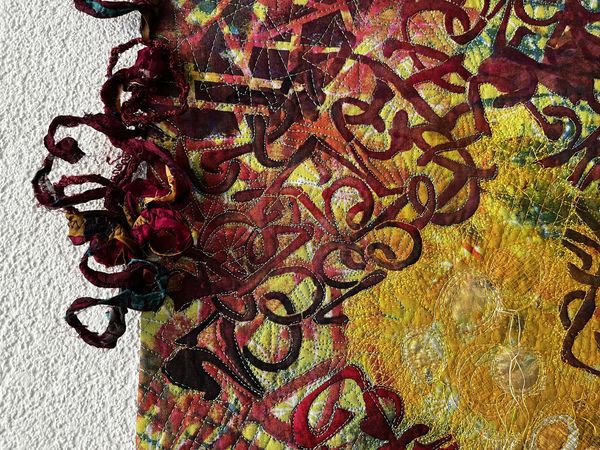
It starts from a calm base: an organized plaid and two slim bands of verdant mini dots. From there, my composition ascents to an upholstery fabric remnant, over-printed and stenciled with intertwined brambles that spill out over the top and sides. Even in a bright spot, circles of abaca and plastic mesh seem to unravel in spiraling thread tails. This jumble of layered entanglements epitomizes much of my quilt art and captures the terrifying complexity of today’s world. Politics deteriorate, war decimates, global warming seems unsolvable. I am lucky to find stress relief in surface design and thread play, my art therapy, meanwhile hoping that all may find more bright spots in our lives.

And all that jazz

Wednesday, May 25th, 2022

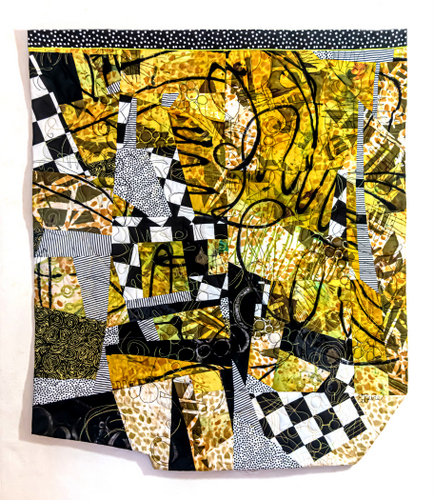
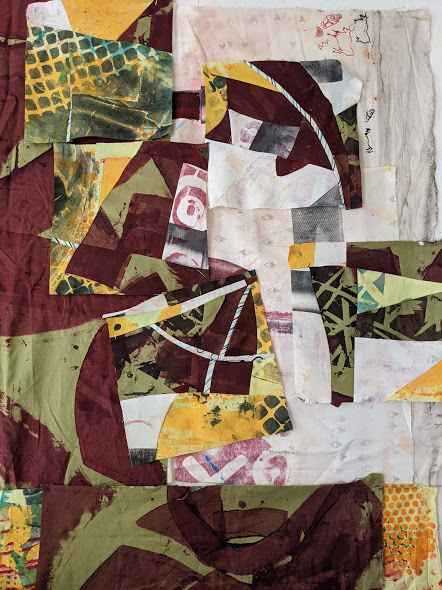
After following the dazzling techniques Pat Pauly taught me for printing fabrics and creating strong compositions with them, I feel pretty proud of my latest art quilt.

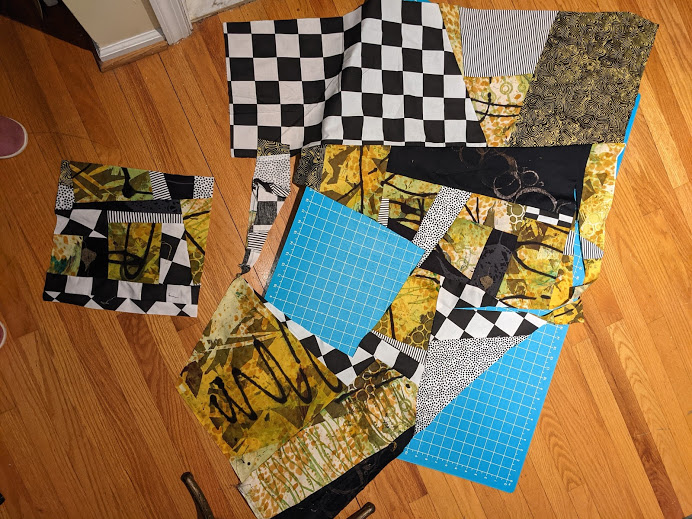
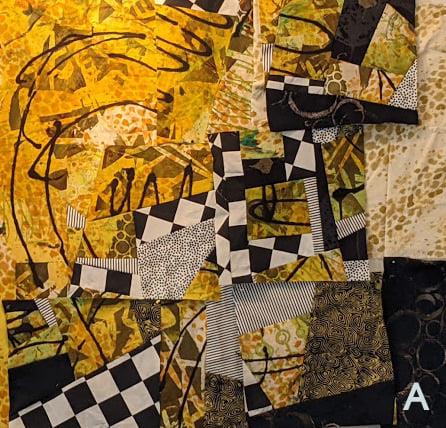
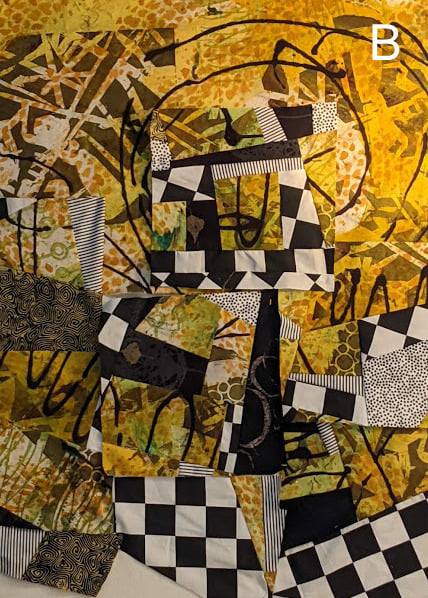
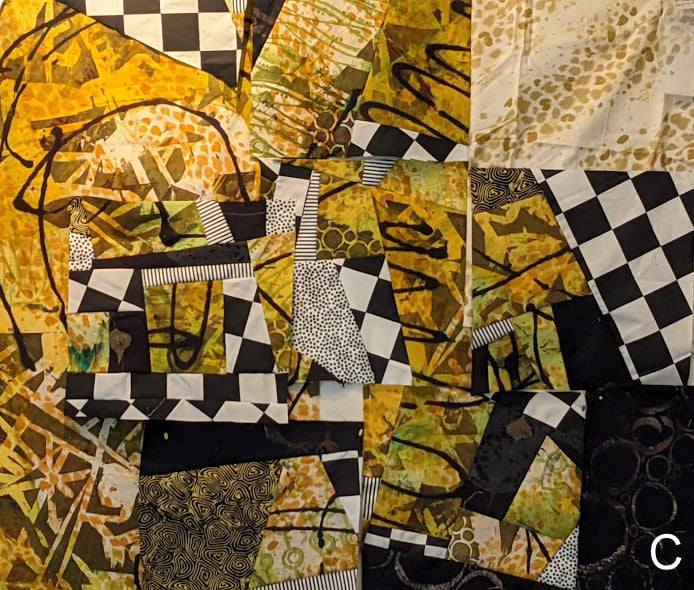
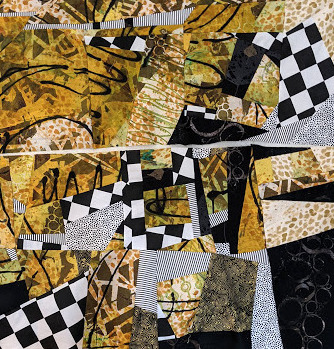
This piece started with a fabric that featured yellow-gold leopard spots on a white background. In Pat’s Glorious Prints class, I added visual texture by stenciling, squeegeeing, and “drawing” big, black arcs with a squeeze bottle. For maximum kickiness, I brought in black fabrics stamped by the Textile Workshop and discharged by Lisa Reber of Dippy Dyes, plus graphic black & white commercial fabrics–a large checkerboard and little polka dots. One of my husband’s worn-out pin-stripe shirts and a batik gave me more contrasts in pattern and scale. Here, I’ve done a bunch of cutting and piecing, improv-style.

I composed with units in various ways, and asked my Facebook friends to help me decide on the strongest composition.

A was the clear winner, especially since that version got the votes of not only Pat Pauly, but also Elizabeth Busch–another brilliant art quilter. Rather than voting, my buddy in Studio Art Quilt Associates (SAQA) for Pennsylvania, Camille Romig, wrote “Jazz” in the comments, naming the piece perfectly for me.

The composition went through some further finicky piecing as it came off the design wall…

…and then I rotated it, added a border along the top, and carved out a couple of chunks from the bottom. My feeling is, since my art quilts aren’t going on stretcher strips or into a frame, they are free to diverge from the rectangle.

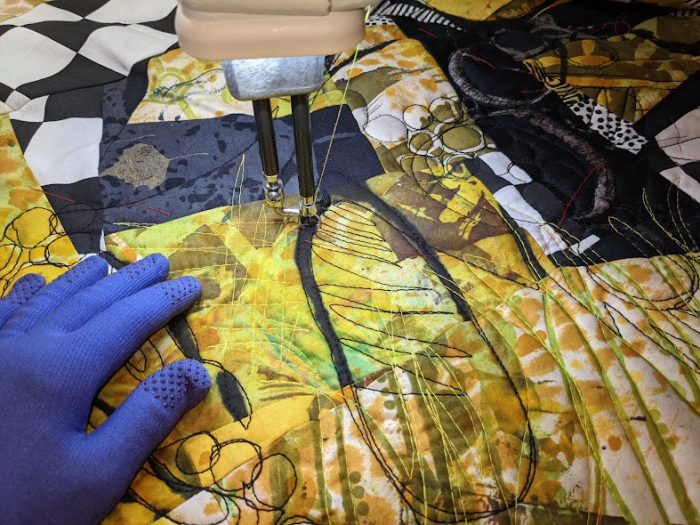
For the quilting, I reunited with my HQ midarm, which hadn’t gotten much use in way too long a time. Was quick and so much fun. Here’s the finished art quilt:

Jazz, by Eleanor Levie

It’s actually one of the very few art quilts I’ve made that I don’t wish to part with! And I cannot wait to use this method again of composing with a combo of my hand-printed fabrics and bold commercial fabrics.

#artquilting #quiltart #printingwiththickeneddyes

Crested Cranes, Part II

Tuesday, July 6th, 2021

The skinny quilt is finished! I sure hope my Kenyan collaborator Meryline Ingaso likes it, and that folks out there will want to bid on it when the Advocacy Project holds its auction of art quilts later this year, which will raise funds for services that will benefit Meryline and her Sister Artists.

But first, here’s the skinny on African crested cranes: thanks to storyteller.travel for this info and video!

1–The African crested crane is quite the looker: light blue eyes, bright red neck, and gorgeous plumage on its head. It stands at over 3 feet tall and from wing-tip to wing-tip can measure over 6 feet. Despite such a wingspan, the adult weighs less than 8 pounds. Hollowed out honeycomb-like bones means the bird is light enough to take flight.

2–It’s the national bird of Uganda (right next door to Kenya) and featured on the Ugandan flag. The marshes and flat grasslands of both Kenya and Uganda offer the birds everything they love in a habitat. Rather than migrating, crested cranes tend to stay in place throughout the year. However, their habitat is slowly being depleted, due to over-use of water for irrigating fields of crops. So, the population is declining and the crested crane has been designated as endangered.

3–The Crested Crane is quite the omnivore gourmand, eating leaves and seeds from a variety of plants, as well as insects, worms, and frogs. These birds have also been seen eating small fish, snakes, and various aquatic eggs.

4–Romance is in the air: Crested cranes choose a partner early on, and mate for life. The only cranes to nest in trees, they build nests that are high up, safe from the reach of predators. Females typically lay between 2 and 4 eggs in a clutch, and the eggs are ready to hatch in about 30 days. They are then ready to breed when they reach 3 years of age, and given their long life-span — about 22 years, they have plenty of years to find a mate and lay lady lay.

4– Not just for courting and breeding, crested cranes love to dance at any time of the year. Young birds often join in the dancing.

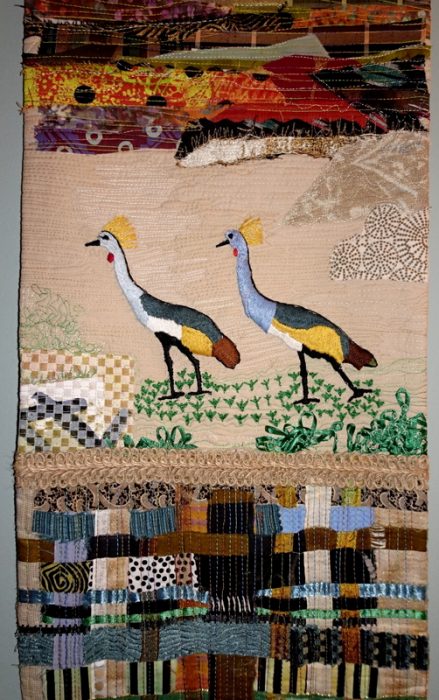
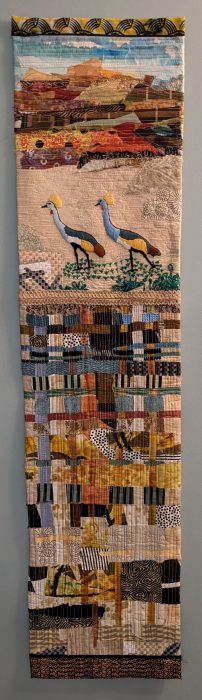
Moving on, I think I managed to combine the three sections — raw-edge applique landscape, Meriline’s embroidery, and a woven expanse — into a cohesive whole, 12″ x 48″. The quilting certainly helped integrate and tame the disparate elements, especially the warp and weft strips of the bottom section.

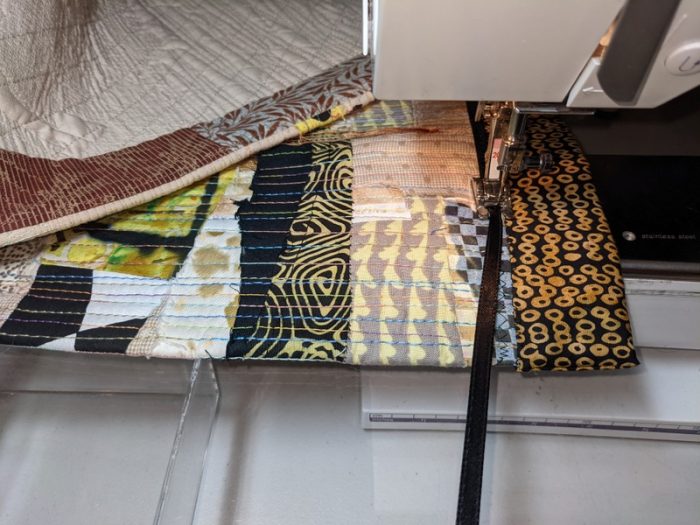
Facings along the long side edges kept the piece from feeling too circumscribed and hemmed in. African fabric for a top border, and a bottom border of batik couched with ribbon was, to my thinking, just enough definition.

And here we are!

Crested Cranes of Kenya

Monday, June 28th, 2021

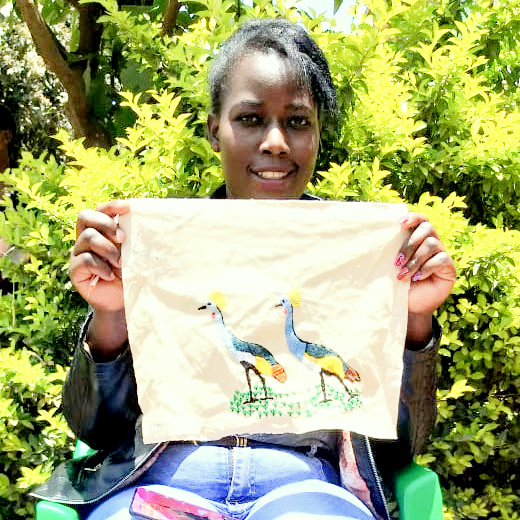
Let me introduce you to my most recent art partner, Meryline Ingaso, who lives in Kangemi, an under-served neighborhood of Nairobi, Kenya. She writes:

Hi! I was born 17/12/1996. I am an orphan, a mother of two kids, all girls. The first, 6, is in baby class. The second, 3, is not yet in school. I earn a living as a mentor. I do voluntary work to empower girls on how to protect themselves in this pandemic. There have been a lot of challenges e.g. buying food and paying rent. But I get a little support from washing cloth to people. That’s how I survive.

Beautiful, inside and out. Hard-working. Creative. Caring. Nurturing. Meriline has joined with forty other “Sister Artists” who under the auspices of the Advocacy Project and during the height of the pandemic, produced beautiful embroidered blocks depicting Kenyan wildlife.

I answered the call to choose a block and incorporate it in an art quilt, and Meriline’s “Crested Cranes” called out to me. The finished piece will be auctioned off to fund services that benefit Meriline and others like her. Maybe you’ll become the proud owner for the completed piece, or another featuring a Sister Artist and a quilter?

By the way, two years ago, I participated in a similar project celebrating the creativity, in embroidery, of young women in Mali. That time, security issues surrounding these women who were victims of sexual violence prevented me from knowing the artist’s name. Nevertheless, I was proud to support the cause and create a Mali Medallion around the charming village scene. Read my story about the making of that art quilt here.

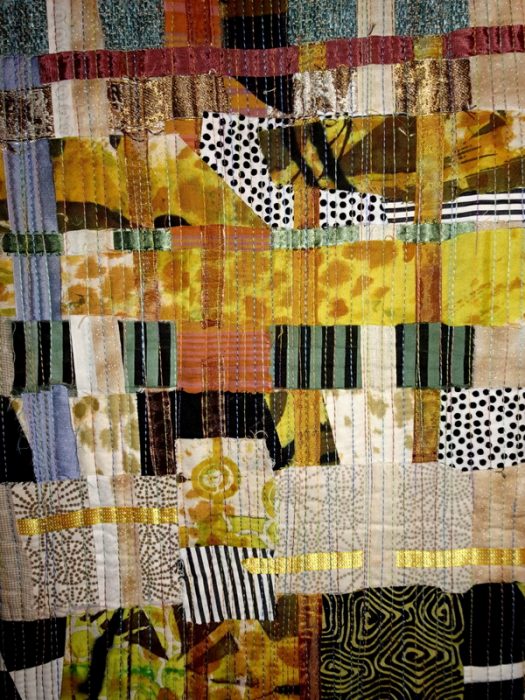
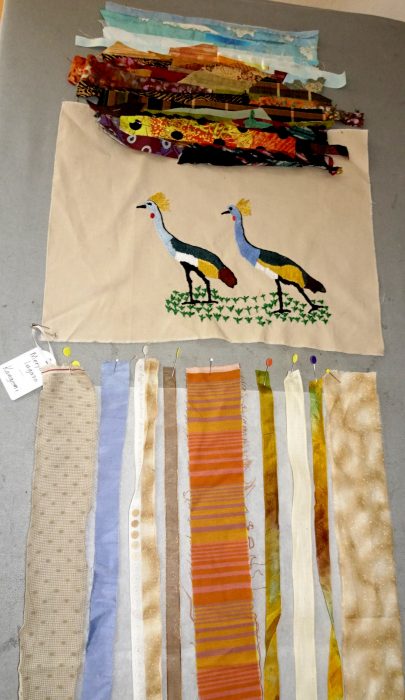
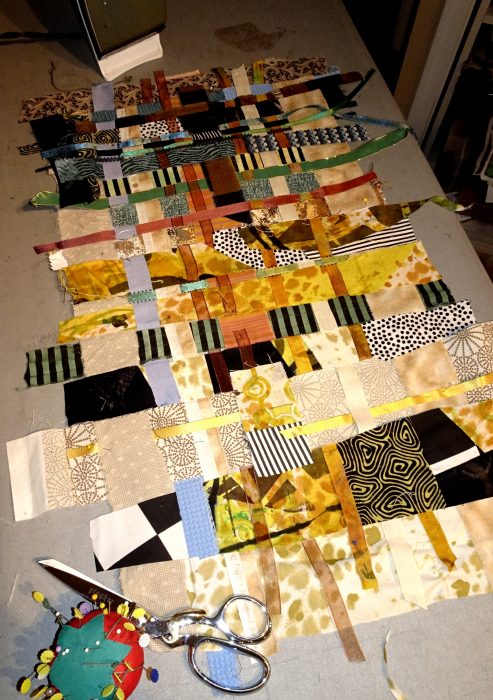
This time, the plan is for a Skinny Quilt. If you know my books, Skinny Quilts & Table Runners and Skinny Quilts & Table Runners II, you’ll be aware that this long narrow slice is my favorite way to compose. And that I love to weave with a variety of textiles. I decided to elaborate on the cranes pictorial with a new, l-o-n-g weaving easily composed on my Big Board. And on top, I added a little UFO — a landscape I threw together long ago in Sue Benner’s exciting Composition Quartet class. My goal is to integrate the three sections so they are cohesive and hopefully flow together.

In addition to my usual weft of commercial fabric and assorted ribbons, I’ve included trimmings from my recent art quilt made with fabric I printed or discharged, and strips cut from upholstery samples. Always keeping Meryline’s charming pictorial close at hand, I tried to bring out the colors she used.

Stay tuned for the quilting and finishing!

Take a class, for goodness sake

Thursday, March 11th, 2021

No excuse not to refresh your skills, broaden your outlook, and fall in love again with fabric when there are so many great instructors teaching on Zoom these days.

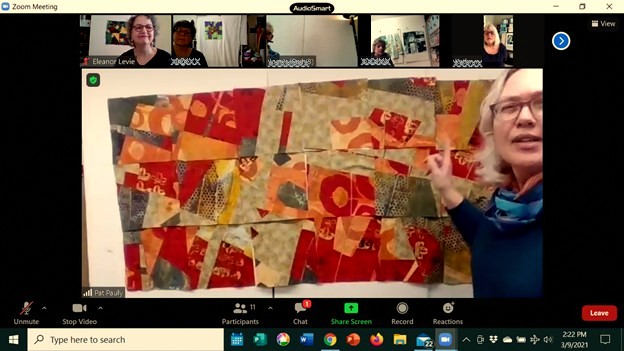
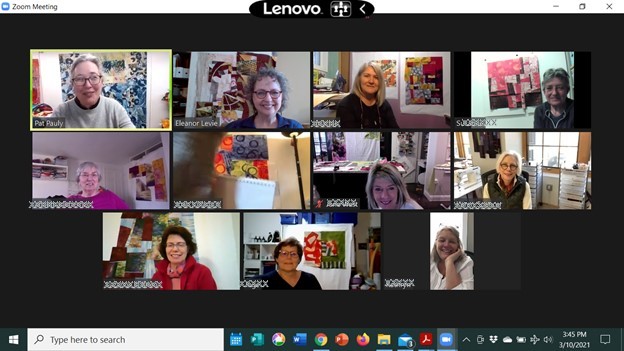
No better teacher (in my book) for sharing how to advance and enhance your skills in improvisational piecing and composing than Pat Pauly. I had the pleasure of taking her new class, “Make It/Break It” this week. My fabulous classmates, all FOPs (fans of Pat) were attending live and online from Germany, Canada, and different parts of the USA. Because in this day and age, we can do that.

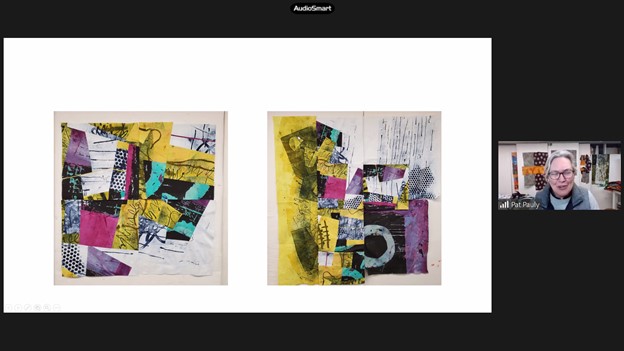
Pat puts her mark on her work by exclusively using her own printed fabrics, almost all with large-scale designs.

And we FOPs followed suit, either using fabrics we printed in Pat’s Glorious Prints classes, or with half-yard purchases of Pat’s creations.

Here’s my design wall, at the end of Day Two. I’m getting somewhere…

The husband passed by and remarked, “It’s certainly different than most of your work.” That’s a good thing; I am quite pleased to be setting off in a different direction. It’s like hitting a refresh button. Boosting confidence in your design skills and aesthetic sensibility. Honing your critical eye while you give yourself permission to play.

Take a class, or a workshop. Try a new direction…something different, or beyond your comfort level. Just google a subject that intrigues you and see what opportunities present themselves.

Trees with Human Traits

Tuesday, March 2nd, 2021
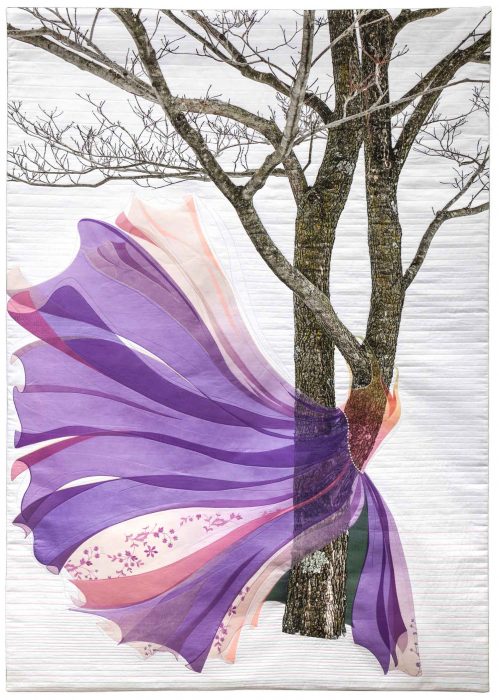
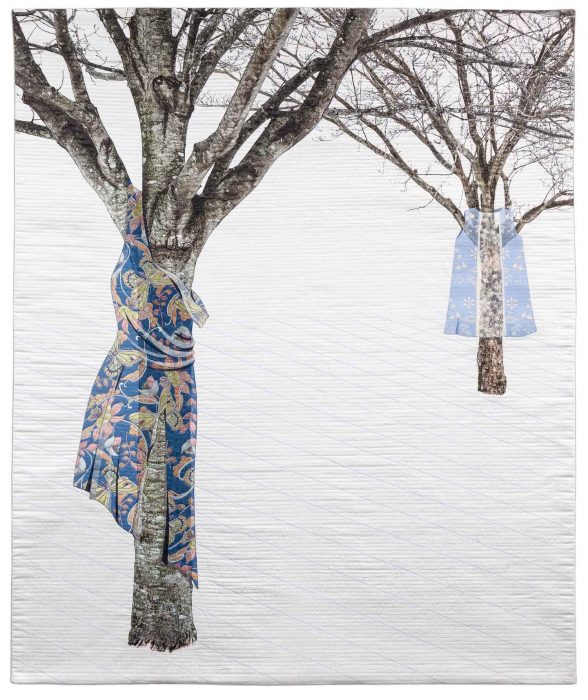
“Aurora,” by Libby Cerullo

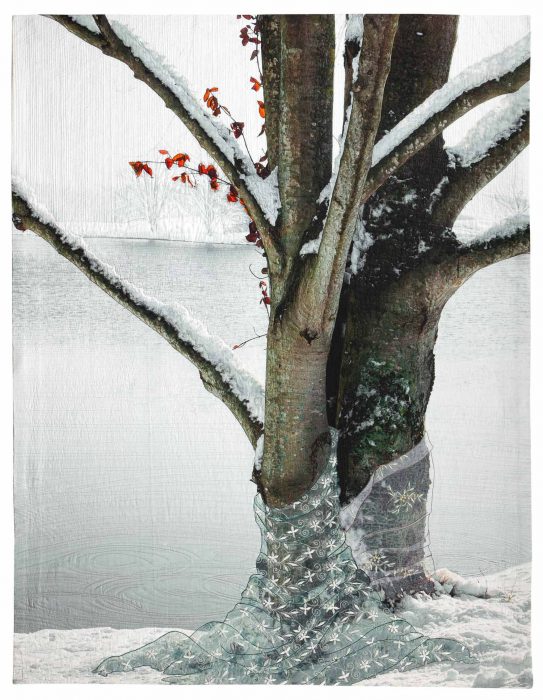
Standing upright, their branches like outstretched arms, certain trees certainly take on the spirit of a human being. Quilt artist Libby Cerullo has a really lovely series of trees in diaphanous frocks. Here’s how Libby works–and I trust she will correct me if I’ve got this wrong: A photo she has taken gets transferred to fabric, using a service like Spoonflower. A following stage involves dressing her subject with appliques of chiffon or organdy with a translucence that allows the photo to show through. Makes me want to dance until dawn!

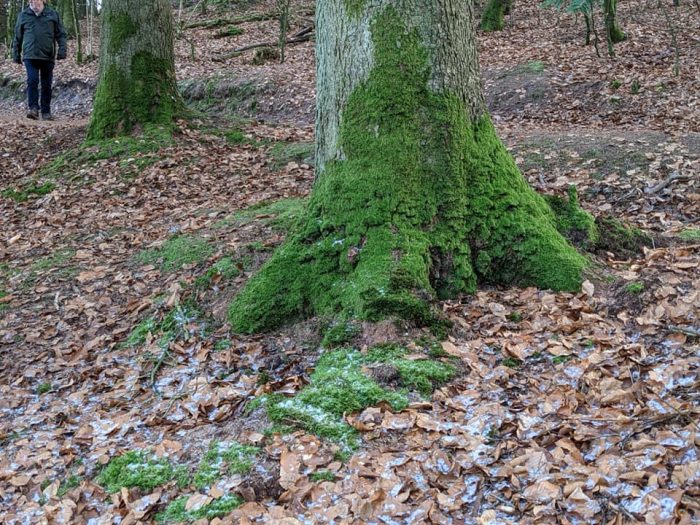
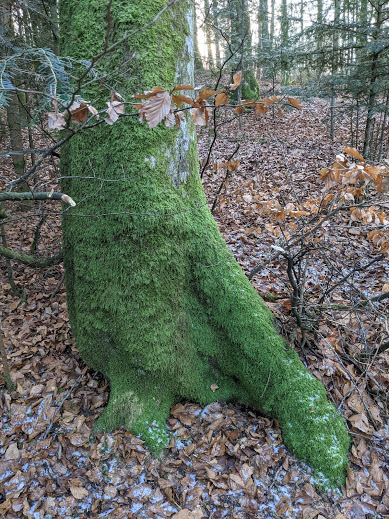
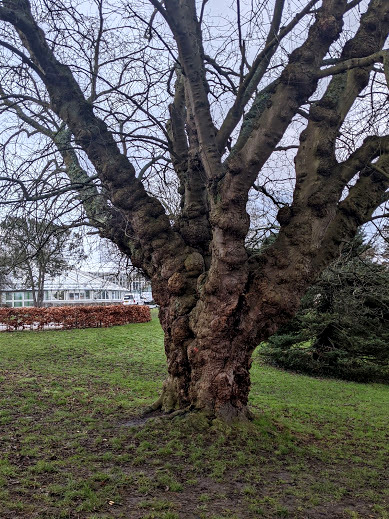
On a recent trip to Denmark this winter, my family and I got many chances to commune with the trees. Covid lockdown prevented us from going to museums or shops, so hikes to various woods and sculpture parks proved to be the cure for our cabin fever. In the cold, damp environs, many of the trees wore skirts of moss. Such wearable art gave the man-made art some stiff competition:

Makes me want to sew and wear a green velvet midi.

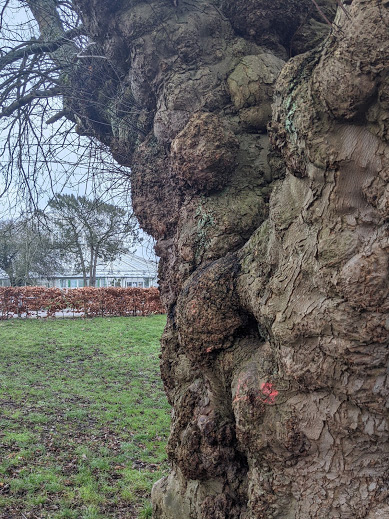
Other trees were gnarled and burly, like an old village elder:

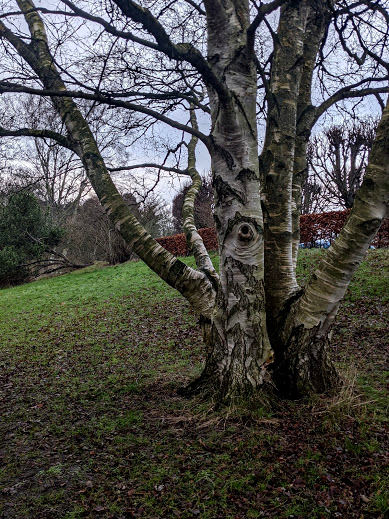
Many a tree sported facial features:

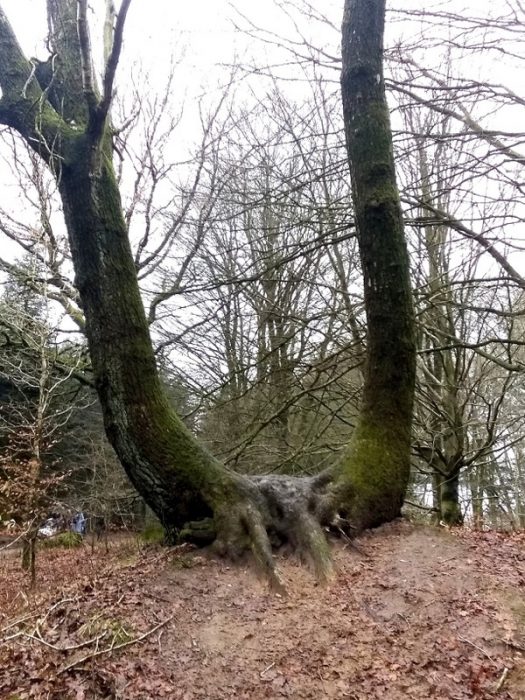
These trees resemble a couple who have grown apart…or two people with different outlooks on life:

Human relationships, as expressed with trees, brings us back to two more exquisite works by Libby Cerullo:

“Mother/Daughter,” by Libby Cerullo
“The Lovers,” by Libby Cerullo

How have you engaged with trees as if they were people?

Line, contrast, form

Wednesday, February 17th, 2021

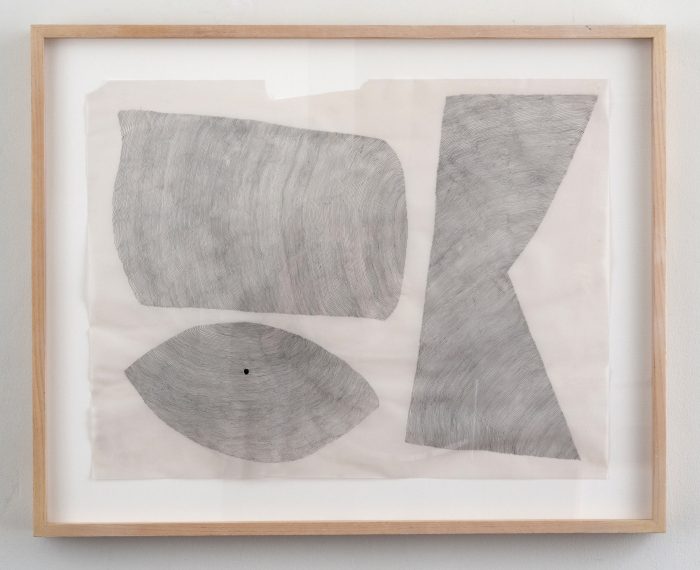
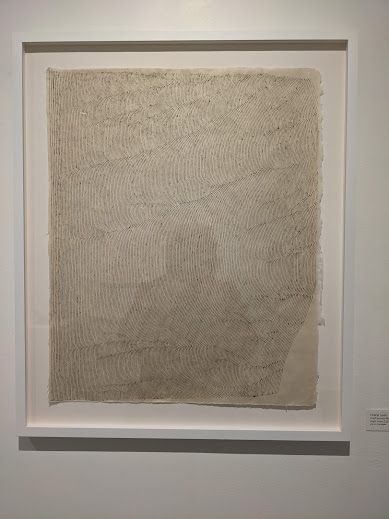
No, not quilts this time. But I just have to share the sublime work of Cheryl Levin which I caught on the last day of her exhibition at Da Vinci Art Alliance on Valentine’s Day.

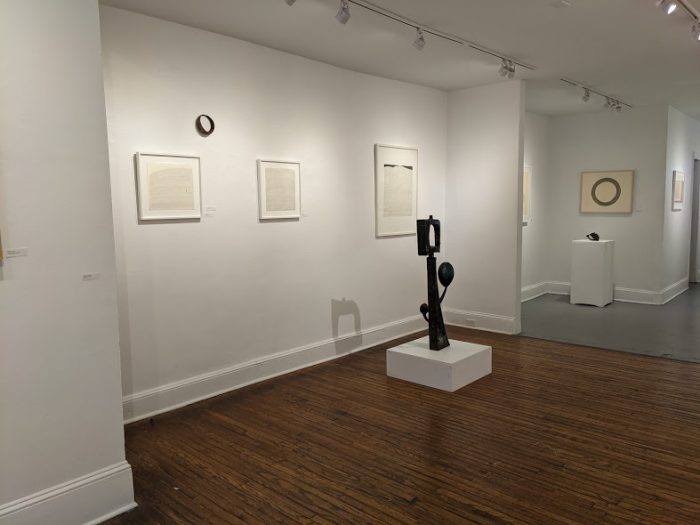
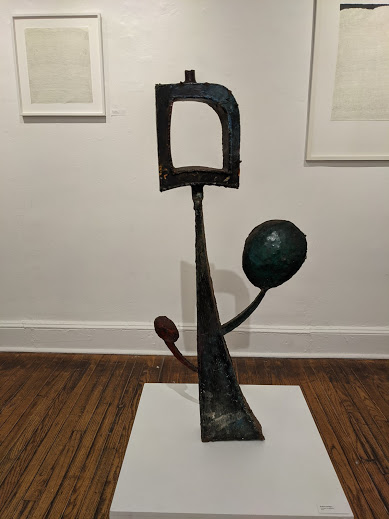
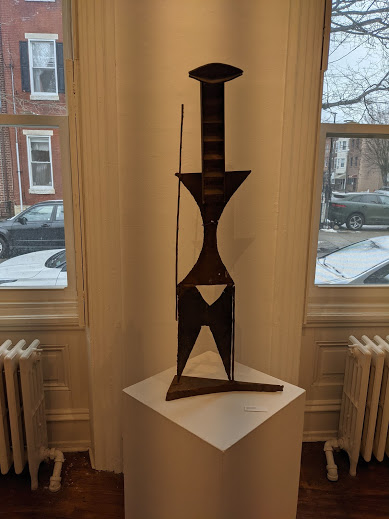
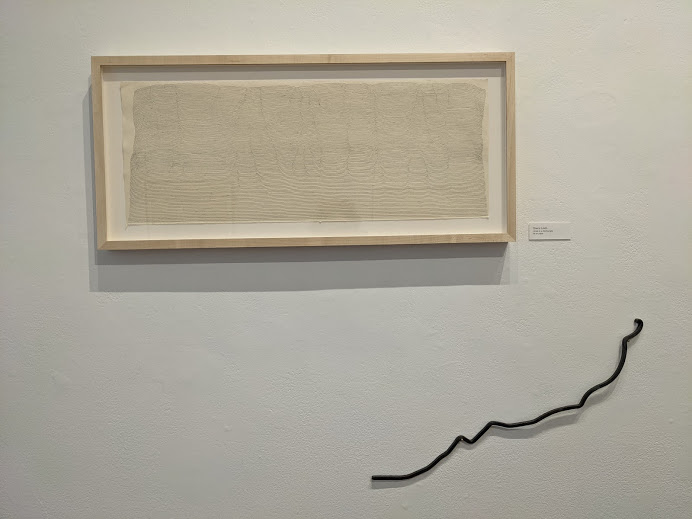
Here’s the description on DVAA’s website: “Forms for a Continued Life is an exhibition of ink drawings by Cheryl Levin shown alongside sculptures and fragments by her late husband, metal worker Robert Phillips (1962-2012), and their son, Electrical Engineer and Generative Artist Aidan Phillips. This visual art exhibition contrasts weight and form to investigate impermanence, collective grief, and emergence of life from loss.”

Heavy, right? I met Cheryl a few years ago, when she worked alongside her friend DaVid Harari to paint our balconies. DaVid is a highly skilled housepainter; the tall, dark, and handsome Israeli has a flip side: musician and music lover. Cheryl is a warm and gracious, humble, petite and pretty woman who sometimes joins DaVid for some house-painting jobs, and offers custom faux finishes and murals to clients. And, she’s a highly conceptual contemporary artist. I’m dazzled by her backstory of partnering with her late husband in creating big works of public art and the ways she evokes very quiet, private emotions in the work of this exhibit. Learn more about her many dimensions — including her very colorful paintings — on her website: http://www.cheryllevin.org

I’m posting to share my own reaction to this exhibit of tightly curated works. And since this is my quilting blog, I’ll take the privilege of citing the elements I savored which echo the ones that get me jazzed about art quilts:

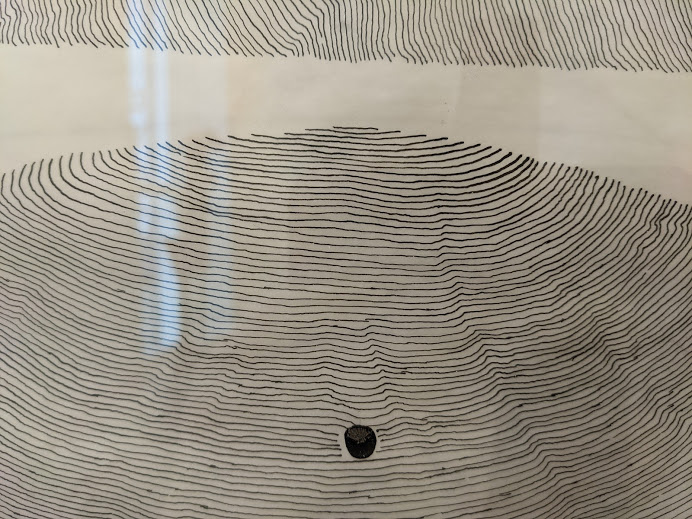
1–Fine lines (like dense, hand-driven machine quilting)

2–Contrast of delicacy and strength (In contemporary quilts, I’m talking about pinstripe stitching paired with monumental shapes and dimensions.) Oooh, those fine lines hand-inked with a pen in rhythmic repetition vs. the weight of the substantial, seemingly solid forms they fill. And, of course, the absolutely huge contrast of her meditative drawing with the often craggy and robust steel sculptures of her late husband.

3–How being at the exhibit in real life allowed me to interact with it: Moving through the spaces. Seeing how the light hit at different angles. Avoiding the inevitable glare from the glass but occasionally tickled by how spots of track-light reflections occupied the margins. Unknowingly casting my shadow on it, and thereby becoming a part of the art. (OK, that was presumptuous and vain of me).

How fortunate I am to be a member of Da Vinci Art Alliance, which allows me to visit during Covid closures elsewhere — albeit by appointment, masked, with only the executive director of DVAA and my husband present. Kudos to all the people and places that allow us to interact with art and artists in the only ways possible during the pandemic. I’m surfing the net, Zooming with other artists, watching lots of different PowerPoint presentations.

But aren’t we all starving to visit museums and galleries IRL–in real life, to be alongside teachers and students in art classes, workshops, and live crit sessions? There’s just nothing like seeing art — and art quilts — up close and personal. There’s nothing as great as getting together in person, unmasked, with the talented makers, critics, and art lovers to share our stories and perspectives as well as what we make.